Navigating Privacy in 2026: US Product Testers’ Guide to Data Sharing and Consent

Anúncios
Navigating Privacy in 2026: What US Product Testers Need to Know About Data Sharing and Consent
As a product tester in the United States, you play a crucial role in bringing innovative products to market. Your feedback shapes the future of technology, consumer goods, and services. However, in an increasingly data-driven world, your participation also involves sharing personal information. Understanding the nuances of product tester privacy, data sharing, and consent in 2026 is not just important; it’s essential for protecting your digital footprint and ensuring your rights are upheld.
The landscape of data privacy is constantly evolving. What was acceptable five years ago might be a serious privacy violation today. With new regulations, technological advancements, and heightened consumer awareness, product testers must be more vigilant than ever. This comprehensive guide will equip you with the knowledge to navigate the complexities of data privacy, empowering you to make informed decisions about your personal data.
Anúncios
The Evolving Landscape of Data Privacy Regulations in 2026
The year 2026 sees a more mature, yet still dynamic, regulatory environment for data privacy. While the European Union’s GDPR (General Data Protection Regulation) set a global benchmark, the US has continued to develop its own patchwork of state-level laws. This creates a complex scenario for companies and, by extension, for product testers.
Key US Privacy Laws Affecting Product Testers
- California Consumer Privacy Act (CCPA) / California Privacy Rights Act (CPRA): California remains at the forefront of US data privacy. The CPRA, fully effective, significantly expands upon the CCPA, granting consumers more control over their personal information, including the right to correct inaccurate data and limit the use and disclosure of sensitive personal information. For product testers residing in California, this means robust protections regarding how companies collect, use, and share your testing data.
- Virginia Consumer Data Protection Act (VCDPA): Virginia’s law provides consumers with rights similar to CCPA/CPRA, focusing on transparency, control, and data security. It applies to companies that conduct business in Virginia or produce products or services targeted to Virginia residents and process a significant amount of personal data.
- Colorado Privacy Act (CPA): Similar in scope to VCDPA, the CPA grants consumers rights to access, correct, delete, and opt-out of the sale of their personal data. It also introduces specific requirements for data protection assessments.
- Other State Laws: Several other states, such as Utah (UCPA) and Connecticut (CTDPA), have enacted their own privacy laws, each with its unique provisions. The trend suggests a continued proliferation of state-specific privacy legislation, potentially leading to a federal privacy law in the future, but for now, the multi-state approach prevails.
For product testers, this means that the specific protections you have can vary depending on your state of residence and the location of the company conducting the testing. It’s crucial to be aware of the laws that apply to you and the companies you engage with.
Anúncios
Understanding ‘Personal Data’ in Product Testing
What exactly constitutes ‘personal data’ when you’re testing products? It’s more than just your name and email address. In the context of product tester privacy, personal data can include:
- Direct Identifiers: Name, email address, physical address, phone number.
- Demographic Information: Age, gender, income bracket, household size, ethnicity (often collected for targeted testing).
- Behavioral Data: How you interact with the product, usage patterns, time spent on features, clicks, gestures, voice commands.
- Biometric Data: Fingerprints, facial scans, voiceprints (especially with smart devices or security products).
- Location Data: GPS coordinates, precise location history (relevant for apps or devices with location-based services).
- Survey Responses: Your opinions, preferences, pain points, and written feedback about the product.
- Device Information: Device type, operating system, IP address, unique device identifiers.
- Sensitive Personal Information (SPI): Under CPRA, this includes racial or ethnic origin, religious or philosophical beliefs, union membership, genetic data, biometric data for identification, health information, sexual orientation, and precise geolocation. Companies have stricter rules for handling SPI.
The breadth of data collected underscores why understanding consent and data sharing practices is paramount for every product tester.
The Cornerstone of Product Tester Privacy: Informed Consent
In 2026, informed consent is not merely a formality; it’s a legal and ethical imperative. For product testers, this means you should clearly understand what data is being collected, why it’s being collected, how it will be used, and with whom it will be shared, before you agree to participate.
What Constitutes Valid Consent?
- Freely Given: You must have a genuine choice. You shouldn’t be coerced or penalized for refusing consent.
- Specific: Consent should be for specific purposes. A blanket consent form for all possible data uses is generally not considered valid. For example, consent to share usage data for product improvement is different from consent to share that data with third-party advertisers.
- Informed: Companies must clearly and concisely explain their data practices in plain language. Jargon-filled legal documents that are difficult to understand are not considered ‘informed’.
- Unambiguous: There should be a clear affirmative action from you, such as checking a box, clicking ‘Accept’, or signing a document. Pre-ticked boxes are generally not valid forms of consent under stricter privacy laws.
- Easily Withdrawn: You must be able to withdraw your consent as easily as you gave it. Companies should provide clear mechanisms for revoking consent at any time.
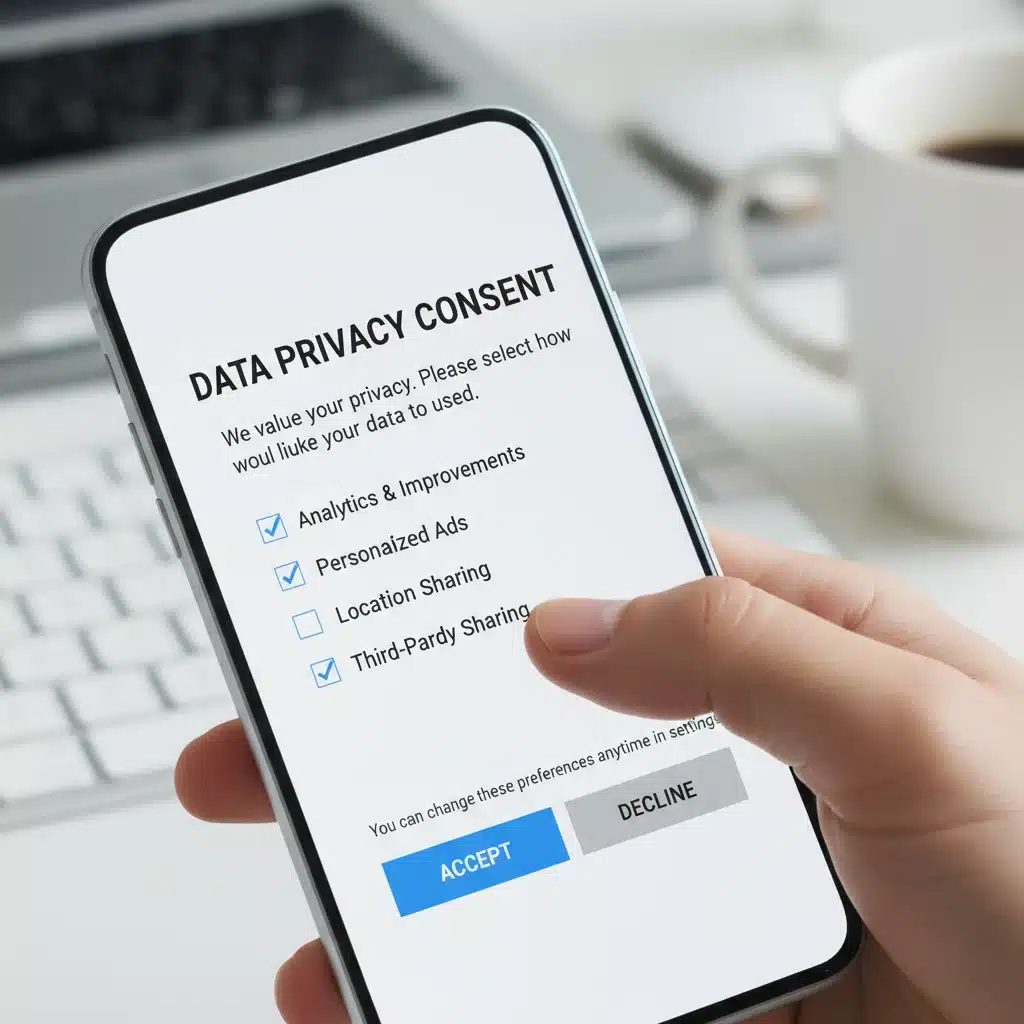
Always read the privacy policy and terms of service carefully. If anything is unclear, don’t hesitate to ask the company for clarification before proceeding with testing. Remember, your consent is your power.
Data Sharing Practices: Who Sees Your Product Testing Data?
One of the most critical aspects of product tester privacy is understanding with whom your data might be shared. Companies rarely operate in a vacuum; they often collaborate with partners, service providers, and sometimes even other entities for various purposes.
Common Scenarios for Data Sharing:
- Internal Use: Most commonly, your data is used internally by the company’s product development, marketing, and research teams to improve the product you’re testing. This is usually the primary purpose stated for data collection.
- Third-Party Service Providers: Companies often outsource certain functions. This could include cloud hosting providers (where your data is stored), analytics platforms (to process and visualize usage data), customer support tools, or specialized research firms that help analyze tester feedback. These third parties are typically bound by contractual agreements to protect your data and only use it for the specified purposes.
- Affiliates and Subsidiaries: If the company is part of a larger corporate group, your data might be shared with its parent company, subsidiaries, or other affiliated entities. This should be clearly disclosed in their privacy policy.
- Partners and Collaborators: In some cases, especially with joint ventures or co-developed products, data might be shared with other companies involved in the product’s creation or distribution. This requires explicit consent and clear disclosure.
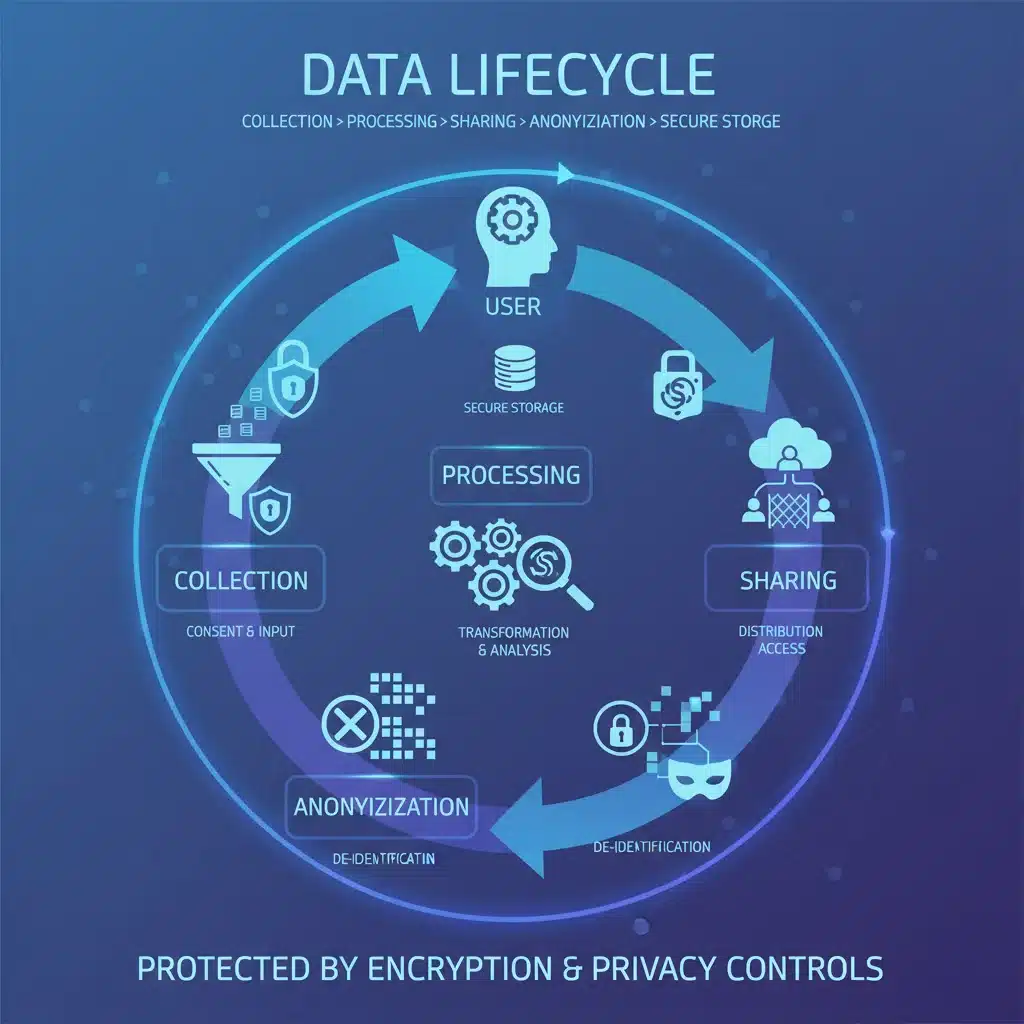
- Anonymized or Aggregated Data: Often, companies will anonymize or aggregate your data before sharing it. Anonymized data cannot be traced back to you, while aggregated data combines information from many testers to show trends without identifying individuals. This type of data sharing is generally considered less risky from a privacy perspective.
- Legal Obligations: Companies may be legally required to share your data with government agencies or law enforcement in response to subpoenas or court orders.
- Business Transfers: In the event of a merger, acquisition, or sale of assets, your data might be transferred to the new entity. Privacy policies typically address this possibility.
It is imperative that the privacy policy explicitly details these sharing practices. If it doesn’t, or if it’s vague, consider it a red flag. Always look for clauses that specify data sharing with ‘third parties’ and understand what that entails.
Best Practices for Product Testers to Protect Their Privacy
While companies have a responsibility to protect your data, you also have an active role to play in safeguarding your product tester privacy. Here are some actionable tips:
1. Read Privacy Policies and Terms of Service (Seriously!)
This cannot be stressed enough. These documents are often lengthy and dense, but they contain vital information about how your data will be handled. Look for sections on:
- What data is collected.
- How data is used.
- With whom data is shared (including types of third parties).
- Your rights regarding your data (access, deletion, correction, opt-out).
- Data retention periods.
- Security measures in place.
If you don’t understand something, ask. If the policy is unclear or seems to grant overly broad permissions, reconsider your participation.
2. Provide Only Necessary Information
When signing up for a testing program, only provide the information that is truly necessary for your participation. If a field seems irrelevant to the product or testing process, question why it’s being requested. For example, if you’re testing a new kitchen appliance, why do they need your social security number?
3. Utilize Privacy Settings and Opt-Out Options
Many products and testing platforms offer granular privacy settings. Take the time to explore these and customize them to your comfort level. Opt-out of non-essential data collection or sharing whenever possible. This includes opting out of marketing communications or sharing data with third-party advertisers.
4. Be Mindful of Data Generated by the Product Itself
Modern products, especially smart devices, can generate a vast amount of data. A smart speaker records voice commands, a fitness tracker monitors your health metrics, and a smart home device tracks your presence. Understand what data the product inherently collects and how that data is transmitted and stored. If you’re uncomfortable with the extent of data collection, you might need to reconsider testing that particular product.
5. Use Strong, Unique Passwords and Two-Factor Authentication (2FA)
Protect your accounts on testing platforms with robust passwords. Use a password manager to create and store unique, complex passwords for each service. Enable 2FA whenever it’s offered, as it adds an extra layer of security against unauthorized access.
6. Understand Data Anonymization vs. Pseudonymization
Companies often talk about anonymizing or pseudonymizing data. Anonymization means the data can no longer be linked to an individual. Pseudonymization means the data is de-identified, but it can potentially be re-identified with additional information. While both offer a degree of privacy, anonymized data provides stronger protection for your product tester privacy.
7. Exercise Your Data Rights
Under laws like CCPA/CPRA, VCDPA, and CPA, you have specific rights regarding your personal data. These typically include:
- Right to Know: To request what personal data a business has collected about you.
- Right to Delete: To request the deletion of personal data collected about you.
- Right to Correct: To request correction of inaccurate personal data.
- Right to Opt-Out: To opt-out of the sale or sharing of your personal data. For sensitive personal information under CPRA, you have the right to limit its use and disclosure.
- Right to Non-Discrimination: A business cannot discriminate against you for exercising your privacy rights.
Familiarize yourself with how to submit these requests to companies you engage with. They are legally obligated to respond within specified timeframes.
8. Be Cautious with Beta Tests and Early Access Programs
While exciting, beta tests often involve products that are still in development and may have less robust security or privacy features than final releases. Data collection in these phases can also be more extensive as companies gather information to refine the product. Understand the increased risks and ensure you’re comfortable with them.
9. Review Your Data Regularly
If a testing platform allows, periodically review the data they have on file for you. This helps ensure accuracy and allows you to identify any data you may wish to have deleted or corrected.
The Future of Product Tester Privacy: What to Expect
Looking ahead, several trends will continue to shape product tester privacy:
- Increased Granularity in Consent: Expect to see more detailed and specific consent requests, allowing testers to opt-in or opt-out of different types of data collection and sharing.
- Privacy-Enhancing Technologies (PETs): Companies will increasingly adopt PETs like differential privacy, homomorphic encryption, and federated learning to minimize the risk of re-identification while still gaining valuable insights from data.
- AI and Machine Learning Ethics: As AI becomes more pervasive in products, ethical considerations around how AI processes and uses personal data will come to the forefront, leading to new regulations and best practices.
- Federal Privacy Legislation: The push for a comprehensive federal privacy law in the US is likely to continue. If enacted, it would standardize privacy protections across states, simplifying the landscape for both companies and consumers.
- Data Minimization: A growing emphasis on collecting only the data absolutely necessary for a product’s function or a testing program’s objective will become a standard.
Common Misconceptions About Product Tester Privacy
Let’s debunk a few common myths that could compromise your product tester privacy:
Myth 1: ‘My data isn’t valuable, so no one cares about it.’
Reality: Every piece of data, no matter how seemingly insignificant, can be valuable when combined with other data points. It can be used for targeted advertising, profiling, or even sold on data markets. Your demographic information, usage habits, and preferences are all commodities in the digital economy.
Myth 2: ‘If a company says they anonymize data, it’s completely safe.’
Reality: While anonymization is a strong privacy measure, true, irreversible anonymization is technically challenging. There have been instances where ‘anonymized’ datasets have been re-identified using other publicly available information. It’s generally safer, but not 100% foolproof, especially with very specific or unique behavioral patterns.
Myth 3: ‘I accepted the terms once, so I can’t change my mind.’
Reality: Most modern privacy laws, including CCPA/CPRA, grant you the right to withdraw consent at any time. Companies are legally required to provide mechanisms for you to do so. Always check the privacy policy for instructions on how to exercise your rights.
Myth 4: ‘All companies treat my data the same way.’
Reality: Data privacy practices vary significantly between companies. Some prioritize privacy and go above and beyond legal requirements, while others do the bare minimum. This is why reading each company’s privacy policy is crucial.
Conclusion: Empowering Your Product Tester Journey with Privacy Awareness
In 2026, being a product tester is an exciting and impactful endeavor. However, it requires a heightened awareness of your digital rights and responsibilities. By understanding the evolving regulatory landscape, recognizing what constitutes personal data, insisting on informed consent, and actively managing your privacy settings, you can ensure your product tester privacy remains intact.
Your feedback is invaluable, but your personal information is priceless. Take the time to educate yourself, ask questions, and exercise your rights. This proactive approach will not only protect you but also contribute to a more transparent and privacy-respecting ecosystem for product testing as a whole. Stay informed, stay secure, and continue to shape the future of products with confidence.