Navigating the Future: Q1 2026 Trends in Digital Survey Methodologies for Consumer Feedback
Anúncios
The landscape of market research is perpetually shifting, driven by technological advancements and evolving consumer behaviors. As we delve into Q1 2026, it’s clear that the methods for gathering consumer feedback are undergoing a profound transformation. Businesses are no longer content with traditional, static questionnaires; they demand dynamic, insightful, and ethically sound approaches to understand their target audiences. This comprehensive article explores the cutting-edge trends in digital survey methodologies, offering a forward-looking perspective on how organizations can leverage these innovations to gain a competitive edge.
The Evolution of Consumer Feedback: A Q1 2026 Perspective
The journey from paper-based surveys to sophisticated digital platforms has been remarkable. In Q1 2026, we observe a culmination of several technological streams converging to create more powerful and nuanced digital survey methodologies. The focus has shifted from merely collecting data to understanding sentiment, predicting behavior, and creating personalized experiences. This evolution is not just about new tools; it’s about a fundamental re-evaluation of how we engage with consumers and interpret their valuable insights.
Anúncios
One of the primary drivers of this change is the ubiquitous nature of digital interaction. Consumers are accustomed to seamless, intuitive experiences across all touchpoints, and their expectations extend to how they provide feedback. Lengthy, generic surveys are rapidly becoming obsolete, replaced by shorter, more engaging, and contextually relevant interactions. The demand for immediate, actionable insights also pushes the boundaries of traditional research, necessitating faster data collection and analysis cycles. This means that businesses must adopt agile digital survey methodologies that can adapt to rapid changes in market dynamics and consumer preferences.
Furthermore, the increasing awareness around data privacy and ethical data handling has profoundly impacted the design and implementation of digital survey methodologies. Consumers are more discerning about who collects their data and how it’s used. This necessitates a transparent and trustworthy approach, where companies not only comply with regulations like GDPR and CCPA but also actively communicate their commitment to data protection. Building this trust is paramount for encouraging honest and comprehensive feedback, which in turn leads to more reliable insights.
Anúncios
Key Trends Shaping Digital Survey Methodologies in Q1 2026
Several significant trends are defining the landscape of digital survey methodologies in Q1 2026. Understanding these trends is crucial for any organization looking to optimize its consumer feedback strategy.
1. The Ascendancy of Artificial Intelligence (AI) and Machine Learning (ML)
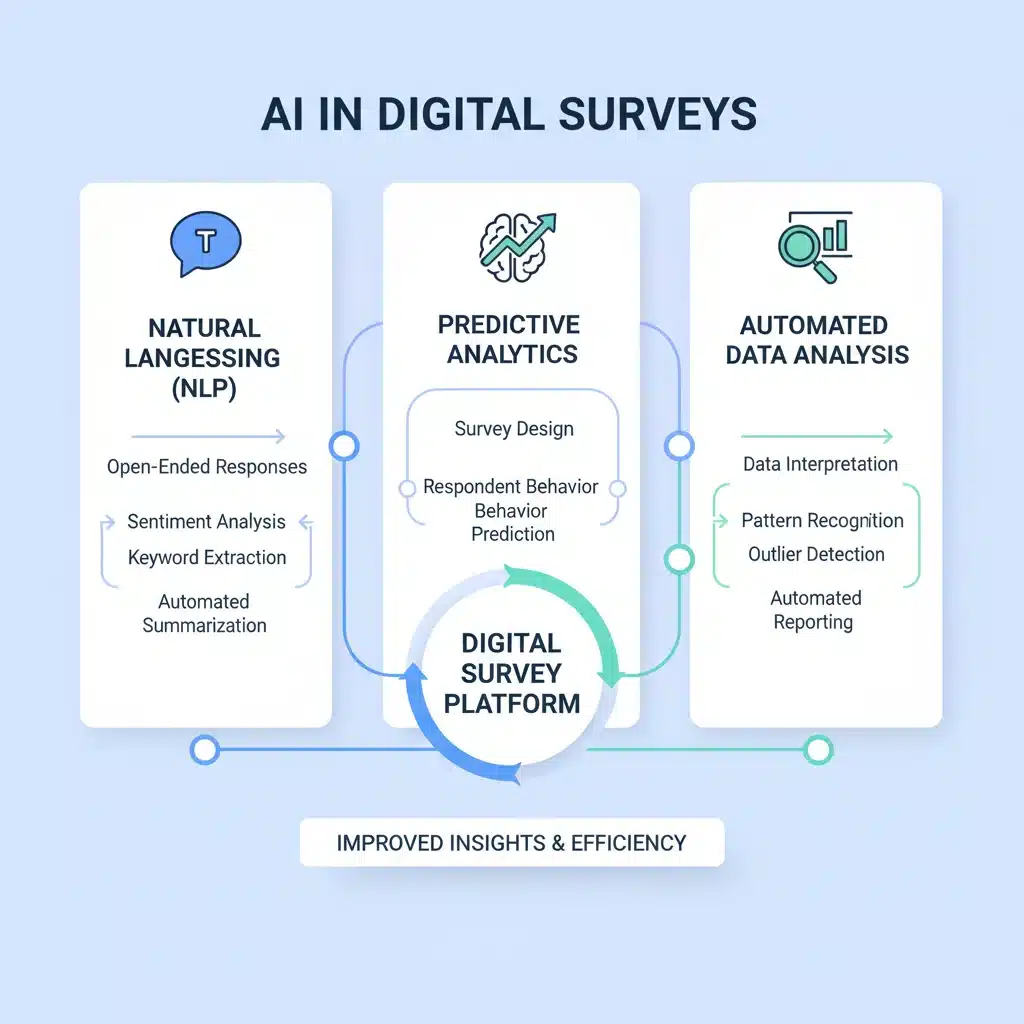
AI and ML are no longer buzzwords; they are integral components of modern digital survey methodologies. In Q1 2026, AI is being leveraged across the entire survey lifecycle, from design to analysis.
- Automated Survey Design: AI algorithms can now analyze vast datasets of past surveys, response patterns, and demographic information to suggest optimal question phrasing, survey length, and even ideal distribution channels. This significantly reduces the time and effort involved in survey creation and improves response rates.
- Natural Language Processing (NLP) for Open-Ended Responses: The ability to accurately analyze qualitative data has been a long-standing challenge. NLP, powered by advanced ML models, can now extract sentiment, identify key themes, and categorize open-ended responses with unprecedented accuracy. This provides richer, more nuanced insights than traditional quantitative analysis alone.
- Predictive Analytics for Targeted Sampling: AI can predict which consumer segments are most likely to provide valuable feedback on specific topics, allowing for more targeted and efficient sampling strategies. This not only saves resources but also ensures that the feedback collected is highly relevant to the research objectives.
- Real-time Anomaly Detection: AI can identify unusual response patterns or potential biases in real-time, allowing researchers to intervene and adjust their digital survey methodologies to maintain data quality.
The integration of AI is making digital survey methodologies smarter, faster, and more capable of uncovering hidden insights that would be impossible to detect manually. It empowers researchers to focus on strategic interpretation rather than laborious data processing.
2. Hyper-Personalization and Adaptive Surveys
Gone are the days of one-size-fits-all surveys. Q1 2026 sees a strong emphasis on hyper-personalization, where the survey experience adapts dynamically to each respondent. This approach significantly boosts engagement and data quality.
- Dynamic Question Branching: Surveys are no longer linear. Advanced branching logic, often guided by AI, presents respondents with questions that are highly relevant to their previous answers, demographic profile, or even their past interactions with the brand.
- Contextual Surveys: Feedback is increasingly sought at the point of experience. This could be a short pop-up survey after a website interaction, a quick poll within an app after a specific feature use, or an email survey triggered by a recent purchase. These contextual surveys are often shorter and more focused, leading to higher completion rates and more accurate recall.
- Gamification Elements: To combat survey fatigue, elements of gamification – such as progress bars, points, badges, and even small rewards – are being integrated into digital survey methodologies. This makes the feedback process more enjoyable and encourages completion.
- Multimodal Feedback: Beyond text, respondents can now provide feedback through various mediums, including voice recordings, video clips, and image uploads. AI-powered analysis tools are then used to interpret these diverse data types, offering a richer understanding of consumer sentiment.
Hyper-personalization transforms the survey from a chore into an engaging interaction, leading to more authentic and valuable feedback. It acknowledges the individual nature of each consumer and tailors the experience accordingly, making digital survey methodologies more effective.
3. Enhanced Data Privacy and Security Measures
With increasing global data privacy regulations and consumer awareness, data privacy and security are paramount in Q1 2026 for all digital survey methodologies. Trust is the foundation of honest feedback.
- Privacy-by-Design Principles: Data privacy is no longer an afterthought but is integrated into the very design of survey platforms and processes. This includes anonymization techniques, data minimization, and secure data storage from the outset.
- Transparent Consent Mechanisms: Clear, concise, and easily understandable consent forms are crucial. Consumers are given granular control over what data is collected, how it’s used, and for how long.
- Blockchain for Data Integrity: Emerging applications of blockchain technology are being explored to ensure the integrity and immutability of survey data, providing an auditable trail and enhancing trust in the data collection process.
- Advanced Encryption: Robust encryption protocols are standard for data in transit and at rest, protecting sensitive consumer information from cyber threats.
- Ethical AI Frameworks: As AI becomes more prevalent, ethical guidelines for its use in data analysis are being developed and implemented to prevent algorithmic bias and ensure fair treatment of all respondents.
Adhering to strict data privacy and security standards is not just about compliance; it’s about building and maintaining consumer trust, which is essential for the long-term success of any digital survey methodologies.
4. Integration with Customer Experience (CX) Platforms
The siloed approach to data collection is diminishing. In Q1 2026, digital survey methodologies are increasingly integrated with broader Customer Experience (CX) and Customer Relationship Management (CRM) platforms.
- Holistic Customer View: By integrating survey data with other customer touchpoints (e.g., purchase history, website interactions, customer service calls), businesses can create a 360-degree view of the customer. This allows for deeper insights into the ‘why’ behind customer behaviors and preferences.
- Triggered Feedback Loops: Feedback requests can be automatically triggered based on specific customer journeys or events within the CX platform. For example, a customer who recently contacted support might receive a short satisfaction survey.
- Personalized Follow-ups: Based on survey responses, automated follow-up actions can be initiated, such as offering a discount to a dissatisfied customer or providing additional information to someone interested in a new product feature.
- Closed-Loop Feedback Systems: Integration enables businesses to close the loop on feedback, ensuring that insights gained from surveys lead to tangible improvements and that customers are informed of these changes.
This integration transforms surveys from standalone research tools into an active component of a continuous customer experience improvement cycle, making digital survey methodologies more impactful and actionable.

5. Micro-Surveys and Mobile-First Design
The shrinking attention spans and prevalence of mobile devices necessitate a shift towards shorter, more digestible surveys optimized for mobile experiences. This is a critical aspect of effective digital survey methodologies in Q1 2026.
- Bite-Sized Feedback: Micro-surveys, often consisting of just one to three questions, are designed to capture immediate feedback without disrupting the user experience. These can be embedded within apps, websites, or even social media platforms.
- Responsive Design: All digital survey methodologies must be inherently responsive, adapting seamlessly to various screen sizes and orientations. This ensures a consistent and positive user experience across desktops, tablets, and smartphones.
- Voice-Enabled Surveys: With the rise of voice assistants, some platforms are experimenting with voice-enabled surveys, allowing users to provide feedback verbally, which can be particularly useful for accessibility and on-the-go interactions.
- Visual and Interactive Elements: Mobile-first design often incorporates more visual elements, such as image-based questions, slider scales, and drag-and-drop interfaces, to make surveys more engaging and less text-heavy.
Optimizing digital survey methodologies for mobile ensures higher participation rates and better data quality, as respondents can provide feedback conveniently, wherever they are.
Challenges and Considerations for Q1 2026 Digital Survey Methodologies
While the advancements in digital survey methodologies offer immense opportunities, they also present new challenges that organizations must address:
- Data Overload: The sheer volume of data collected through advanced methodologies can be overwhelming. Businesses need robust analytical tools and skilled personnel to make sense of the data and extract meaningful insights.
- Maintaining Data Quality: As surveys become more complex and personalized, ensuring the quality and representativeness of the data remains crucial. Biases can still creep in, and sophisticated validation techniques are necessary.
- Technological Investment: Implementing cutting-edge AI, ML, and integrated CX platforms requires significant investment in technology and infrastructure. Small to medium-sized enterprises might find this a barrier.
- Ethical AI Use: The ethical implications of AI in data collection and analysis, particularly concerning bias and fairness, must be carefully managed. Transparency in AI usage is key to maintaining trust.
- Respondent Fatigue (in new forms): While personalization aims to reduce fatigue, poorly designed adaptive surveys or an excessive number of micro-surveys can still lead to respondent burnout if not managed effectively.
- Skills Gap: The evolving nature of digital survey methodologies demands new skill sets from market researchers, including proficiency in data science, AI tools, and ethical data practices.
Addressing these challenges requires a strategic approach, continuous learning, and a willingness to adapt to the rapidly changing technological landscape. Organizations that proactively tackle these issues will be better positioned to harness the full potential of advanced digital survey methodologies.
Best Practices for Implementing Advanced Digital Survey Methodologies
To successfully navigate the complexities and capitalize on the opportunities presented by Q1 2026’s digital survey methodologies, consider these best practices:
- Define Clear Objectives: Before deploying any survey, clearly articulate what you aim to learn. Specific, measurable objectives will guide your survey design and analysis, ensuring that your digital survey methodologies are purpose-driven.
- Start Small, Iterate, and Scale: Don’t try to implement all advanced features at once. Begin with a pilot program, gather feedback on your survey design and respondent experience, iterate based on learnings, and then scale up.
- Invest in the Right Technology Stack: Choose survey platforms and analytical tools that offer the flexibility, integration capabilities, and advanced features (like AI/ML) that align with your strategic goals for digital survey methodologies.
- Prioritize Data Privacy and Transparency: Make data privacy a cornerstone of your survey strategy. Be transparent with respondents about data collection and usage, and ensure compliance with all relevant regulations. This builds trust and encourages honest feedback.
- Focus on the Respondent Experience: Design surveys that are engaging, easy to complete, and respectful of the respondent’s time. Utilize personalization, gamification, and mobile-first design principles to enhance the experience.
- Integrate with Existing Systems: Leverage the power of integration by connecting your digital survey methodologies with your CRM, CX platforms, and other business intelligence tools to create a unified view of the customer.
- Continuously Analyze and Act on Insights: Data collection is only half the battle. Establish processes for continuous analysis of survey data and, more importantly, for translating those insights into actionable business strategies and improvements.
- Train Your Team: Equip your market research team with the necessary skills to utilize advanced survey tools, interpret AI-driven insights, and navigate the ethical considerations of modern data collection.
- Monitor Trends and Adapt: The digital landscape is always changing. Stay abreast of emerging technologies and best practices in digital survey methodologies to ensure your approach remains cutting-edge and effective.
By adhering to these best practices, organizations can transform their consumer feedback mechanisms from reactive data collection into proactive, insightful, and strategic assets.
The Future Outlook for Digital Survey Methodologies Beyond Q1 2026
Looking beyond Q1 2026, the evolution of digital survey methodologies is set to continue at a rapid pace. We can anticipate even greater integration of immersive technologies, such as Virtual Reality (VR) and Augmented Reality (AR), to create highly contextual and experiential feedback environments. Imagine testing a new product concept in a virtual store and providing feedback directly within that immersive experience.
The role of biometric data, collected with explicit consent, could also become more prominent in understanding subconscious reactions to products, services, or advertisements, adding another layer of depth to consumer insights. Furthermore, the ethical debate around data ownership and the right to be forgotten will undoubtedly shape future regulations, pushing for even greater transparency and control for consumers over their data. This will require continuous innovation in privacy-preserving techniques within digital survey methodologies.
The lines between market research, customer service, and product development will continue to blur, as feedback becomes an integrated, real-time component of the entire business ecosystem. The emphasis will remain on creating seamless, valuable interactions that benefit both the consumer and the business. As such, staying agile, innovative, and customer-centric will be paramount for any organization wishing to thrive in this dynamic environment of digital survey methodologies.
Conclusion
The first quarter of 2026 presents a thrilling and challenging period for digital survey methodologies. The integration of AI, the drive for hyper-personalization, the imperative of data privacy, and the seamless integration with CX platforms are not just fleeting trends but fundamental shifts in how businesses understand their consumers. By embracing these advancements and adhering to best practices, organizations can move beyond mere data collection to cultivate a deeper, more empathetic, and ultimately more profitable relationship with their customer base. The future of consumer feedback is intelligent, personalized, and ethical, and those who adapt will lead the way.