
Unlocking Data-Driven Decisions: Comparing User Feedback Platforms for Optimal Consumer Insights in 2026
In the rapidly evolving digital landscape, understanding your customers is not just an advantage; it’s a necessity. Businesses that excel in 2026 will be those that master the art of collecting, analyzing, and acting upon consumer insights. At the heart of this mastery lie robust user feedback platforms. These sophisticated tools are the backbone of data-driven decision-making, enabling companies to refine products, enhance services, and build stronger customer relationships.
The market for user feedback platforms is more dynamic than ever, with new technologies and methodologies constantly emerging. Choosing the right platform can feel like navigating a labyrinth, but the stakes are too high to make an uninformed decision. This comprehensive guide will delve into the critical aspects of selecting and utilizing these platforms, ensuring your business is equipped to gather optimal consumer insights and stay ahead of the curve.
We’ll explore the key features, benefits, and considerations for various user feedback platforms, providing you with the knowledge to make an informed choice tailored to your specific business needs. From small startups to large enterprises, the power of direct customer input, when properly harnessed, can transform your strategic outlook and operational efficiency.
Anúncios
The Imperative of User Feedback in 2026: Why It Matters More Than Ever
The year 2026 marks a pivotal point where customer expectations are higher, competition is fiercer, and the pace of technological change is relentless. In this environment, guesswork is no longer an option. Every product iteration, every service update, and every marketing campaign must be informed by concrete data, and the most valuable data often comes directly from your users. User feedback platforms provide the structured mechanisms to collect this invaluable input.
Anúncios
Think about the rise of personalized experiences and AI-driven recommendations. These advancements are only as good as the data that feeds them. Consumer insights derived from effective feedback loops help companies:
- Identify Pain Points: Understand where users struggle or get frustrated with your product or service.
- Uncover Opportunities: Discover unmet needs or innovative ideas directly from your target audience.
- Validate Assumptions: Test hypotheses about new features or design changes with real users before full-scale implementation.
- Measure Satisfaction: Track key metrics like Net Promoter Score (NPS), Customer Satisfaction (CSAT), and Customer Effort Score (CES) over time.
- Drive Loyalty: Show customers that their opinions are valued, fostering a sense of engagement and trust.
- Reduce Churn: Proactively address issues that might lead customers to seek alternatives.
Without dedicated user feedback platforms, businesses risk operating in a vacuum, making decisions based on internal biases or outdated information. The cost of such missteps can be significant, ranging from wasted development resources to reputational damage and lost market share. Investing in the right tools is therefore an investment in your future viability and growth.
Key Features to Look for in Modern User Feedback Platforms
As you evaluate the myriad of user feedback platforms available, it’s crucial to understand what constitutes a truly effective solution in 2026. The ideal platform should offer a comprehensive suite of features that streamline the entire feedback process, from collection to analysis and action. Here are the non-negotiable features:
1. Multi-Channel Feedback Collection
Your users interact with your brand across various touchpoints. A leading platform should support diverse methods of feedback collection, including:
- Surveys: Customizable questionnaires (NPS, CSAT, CES, product-specific surveys) delivered via email, in-app, or website pop-ups.
- In-App/In-Website Widgets: Discreet and contextual ways for users to submit feedback without leaving their current experience.
- Session Replays & Heatmaps: Visual tools to understand user behavior and identify areas of friction.
- User Interviews & Usability Testing: Tools to schedule, conduct, and record qualitative research sessions.
- Community Forums & Idea Boards: Platforms for users to submit ideas, vote on suggestions, and engage with each other.
- Social Media Monitoring: Integration to capture public sentiment and mentions.
2. Advanced Analytics and Reporting
Collecting data is only half the battle; deriving actionable insights is the ultimate goal. Modern user feedback platforms must offer powerful analytical capabilities:
- Sentiment Analysis: AI-driven interpretation of text feedback to gauge emotional tone.
- Text Analytics & Tagging: Automatic categorization and identification of themes within open-ended responses.
- Trend Analysis: Ability to track feedback patterns over time and spot emerging issues or successes.
- Segmentation: Filter and analyze feedback based on user demographics, behavior, or other custom attributes.
- Customizable Dashboards: Visual representations of key metrics and insights, tailored to different stakeholders.
- Benchmarking: Compare your performance against industry standards or competitors (if data is available).
3. Integration Capabilities
A standalone feedback tool has limited utility. The best user feedback platforms integrate seamlessly with your existing tech stack, including:
- CRM Systems: Connect feedback to individual customer profiles for a 360-degree view.
- Project Management Tools: Automatically create tasks or tickets based on user-reported issues or feature requests.
- Marketing Automation Platforms: Trigger personalized communications based on feedback.
- Business Intelligence (BI) Tools: Export raw or processed data for deeper analysis alongside other business metrics.
- Communication Tools: Slack, Microsoft Teams integrations for real-time alerts and discussions.
4. Workflow Automation & Collaboration
To truly be data-driven, feedback must lead to action. Platforms should facilitate this process:
- Automated Alerts: Notify relevant teams when specific feedback criteria are met (e.g., low NPS score, critical bug report).
- Role-Based Access: Control who can view, analyze, and manage feedback.
- Commenting & Discussion Features: Enable internal teams to discuss feedback items directly within the platform.
- Feedback Prioritization: Tools or methodologies (e.g., RICE scoring) to help teams decide which feedback to act on first.
5. User Experience (UX) and Ease of Use
A powerful platform is useless if it’s difficult to navigate. Look for an intuitive interface for both administrators and end-users providing feedback.

Top User Feedback Platforms to Consider in 2026
With the criteria above in mind, let’s explore some of the leading user feedback platforms that are setting the standard in 2026. This is not an exhaustive list, but it highlights platforms known for their comprehensive features and effectiveness.
1. Qualtrics: The Enterprise Powerhouse
Qualtrics remains a dominant force, especially for large enterprises. It offers an Experience Management (XM) platform that goes beyond simple feedback collection, encompassing customer, employee, product, and brand experiences. Its strength lies in its advanced statistical analysis capabilities, AI-powered insights, and robust integration ecosystem. For organizations with complex needs and a substantial budget, Qualtrics provides unparalleled depth in understanding consumer insights. Its survey capabilities are industry-leading, and its predictive intelligence helps identify future trends.
2. SurveyMonkey: Versatility and Accessibility
SurveyMonkey continues to be a popular choice due to its user-friendly interface and versatility. While it might not have the same depth of niche features as some enterprise solutions, its ease of use makes it accessible for teams of all sizes. In 2026, SurveyMonkey has further enhanced its AI capabilities for survey design and data analysis, making it quicker to get actionable insights. It’s excellent for quick surveys, market research, and general customer satisfaction tracking, and its pricing models are flexible.
3. Hotjar: Behavioral Insights & Visual Feedback
Hotjar excels in providing visual feedback and understanding user behavior on websites and web applications. Its combination of heatmaps, session recordings, and on-site feedback widgets (like polls and surveys) offers a powerful qualitative layer to quantitative analytics. For product teams and UX designers, Hotjar is indispensable for identifying usability issues and optimizing conversion funnels. Its focus on ‘why’ users do what they do makes it a crucial tool for enhancing digital experiences.
4. UserTesting: Direct User Interaction
When direct interaction is paramount, UserTesting stands out. It provides on-demand access to real users who can test products, websites, or prototypes while providing spoken feedback. This platform is invaluable for usability testing, concept validation, and gaining deep qualitative insights into user thought processes. In 2026, UserTesting has integrated more AI-driven analysis to quickly summarize findings from numerous user sessions, making the process of synthesizing qualitative data more efficient.
5. Medallia: Holistic Customer Experience Management
Medallia is another enterprise-grade platform focused on comprehensive Customer Experience (CX) management. It aggregates feedback from various channels—surveys, social media, call centers, and more—into a single platform. Medallia’s strength lies in its ability to connect feedback to operational data, allowing businesses to understand the financial impact of customer experience. Its AI engine, Athena, provides predictive insights and prescriptive actions, making it a powerful tool for large organizations committed to CX transformation.
6. GetFeedback (by SurveyMonkey): Focused CX Surveys
GetFeedback, now part of SurveyMonkey, is designed for creating beautiful, mobile-friendly surveys that are easy for customers to complete. It integrates deeply with Salesforce, making it particularly attractive for businesses that rely heavily on the CRM platform. GetFeedback focuses on transactional and relationship-based surveys, providing real-time feedback that can trigger automated actions within Salesforce, ensuring that customer issues are addressed promptly.
7. Canny: Product-Centric Feedback & Roadmapping
Canny is a specialized platform perfect for product-led growth companies. It combines feedback collection, feature request management, and public roadmapping into one tool. Users can submit ideas, vote on existing suggestions, and see what’s planned for development. This transparency fosters a strong community and ensures that product development is directly aligned with user needs. For SaaS companies and software developers, Canny streamlines the process of gathering and prioritizing feature requests.
Implementing User Feedback Platforms for Maximum Impact
Acquiring a powerful user feedback platform is merely the first step. To truly unlock its potential and drive data-driven decisions, businesses must adopt a strategic approach to implementation and ongoing usage. Here are critical considerations:
1. Define Clear Objectives
Before deploying any platform, clearly articulate what you aim to achieve. Are you looking to reduce churn, improve a specific feature, increase conversion rates, or boost overall customer satisfaction? Specific objectives will guide your choice of platform, the types of feedback you collect, and how you analyze the data.
2. Integrate Across Departments
Consumer insights are not just for the product team. Marketing can use them for messaging, sales for understanding customer needs, and support for improving service. Ensure your chosen platform can integrate with relevant departmental tools and that insights are shared broadly. Break down silos to ensure feedback informs every aspect of your business.
3. Close the Feedback Loop
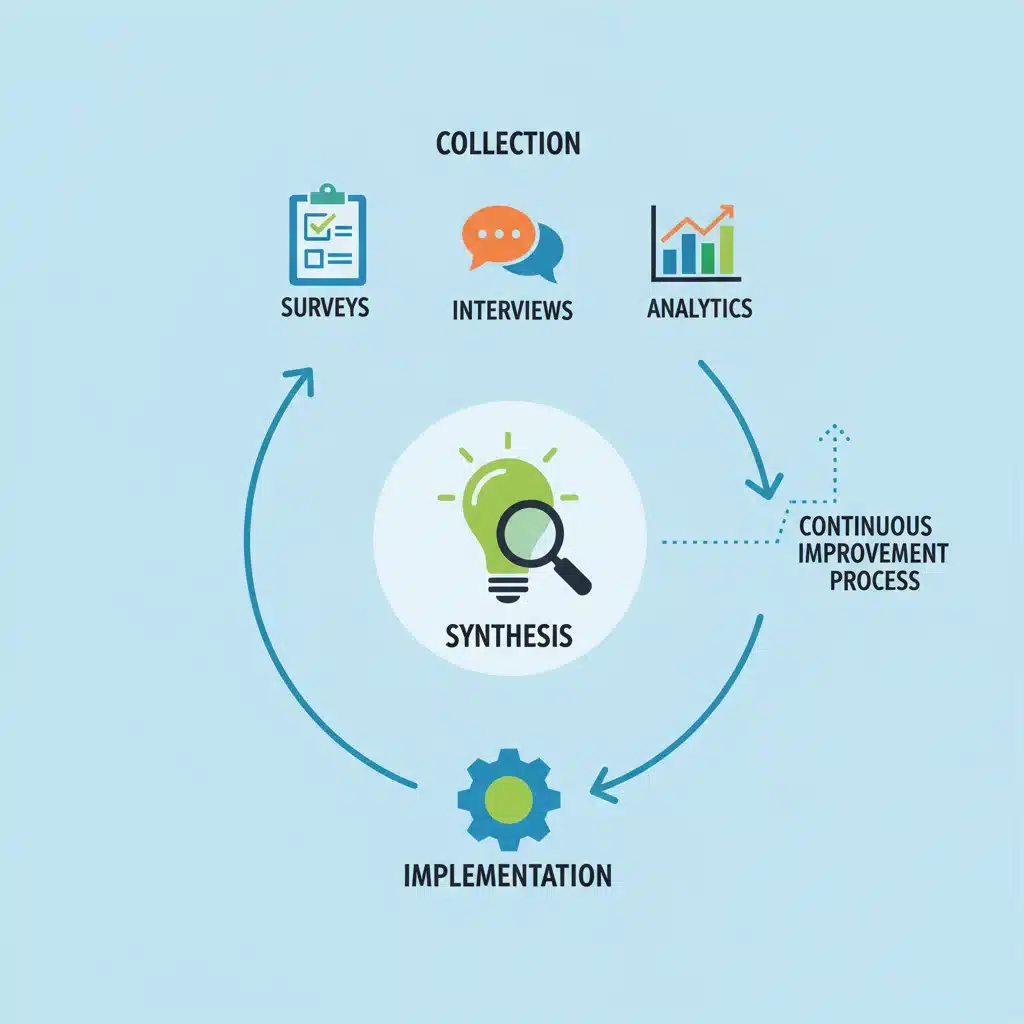
One of the most common pitfalls is collecting feedback but failing to act on it or communicate back to users. A robust feedback loop involves:
- Acknowledgement: Thank users for their input.
- Action: Implement changes based on insights.
- Communication: Inform users about the changes made because of their feedback. This builds trust and encourages future participation.
Many user feedback platforms offer features to help automate parts of this loop, such as sending automated ‘we’ve fixed it’ emails to users who reported an issue.
4. Start Small, Scale Gradually
Don’t try to implement every feedback mechanism at once. Begin with a few key channels (e.g., in-app surveys, NPS) and expand as your team becomes proficient and you identify further needs. This iterative approach minimizes disruption and allows for continuous optimization of your feedback strategy.
5. Train Your Team
Ensure all relevant team members are trained on how to use the user feedback platform effectively, from setting up surveys to interpreting dashboards and generating reports. A well-trained team is crucial for maximizing the value derived from your investment.
6. Continuously Monitor and Adapt
The market, your product, and your customers are constantly changing. Your feedback strategy should too. Regularly review the effectiveness of your feedback channels, the types of questions you’re asking, and the insights you’re generating. Be prepared to adapt your approach based on what you learn.
The Future of User Feedback: Trends for 2026 and Beyond
The landscape of user feedback platforms is not static. Several key trends are shaping its future, and businesses should be aware of these to stay competitive:
1. Hyper-Personalized Feedback Requests
Generic surveys are becoming less effective. Expect more sophisticated platforms to leverage AI and machine learning to deliver highly personalized feedback requests based on individual user behavior, journey stage, and past interactions. This will lead to higher response rates and more relevant insights.
2. Proactive and Predictive Insights
Beyond simply reacting to feedback, user feedback platforms will increasingly offer proactive and predictive capabilities. AI will analyze patterns to anticipate potential issues or opportunities before they become widespread, allowing businesses to intervene preemptively.
3. Enhanced Integration with AI and Automation
The seamless integration of AI for sentiment analysis, topic modeling, and automated response generation will become standard. Automation will extend to triggering actions in other systems, further streamlining the feedback-to-action pipeline.
4. Focus on ‘Experience Orchestration’
Platforms will move towards orchestrating the entire customer journey, not just collecting feedback at specific touchpoints. This involves mapping feedback to specific journey stages and understanding how different experiences impact the overall customer relationship.
5. Ethical AI and Data Privacy
As AI becomes more prevalent, ethical considerations and data privacy will be paramount. Platforms will need to offer robust privacy controls and adhere to evolving regulations, ensuring trust and transparency in data collection and usage.
6. Conversational Feedback Interfaces
Chatbots and conversational AI will play a larger role in collecting feedback, offering a more natural and engaging experience for users, especially for quick, in-the-moment input.
Choosing the Right User Feedback Platform for Your Business
With so many options and considerations, how do you make the final decision? Here’s a structured approach to selecting the ideal user feedback platform:
1. Assess Your Needs and Budget
Start by clearly defining your primary goals, the types of feedback you need to collect (quantitative, qualitative, behavioral), and the volume of data you expect. Understand your team’s technical capabilities and your budget constraints. Some platforms offer free tiers or trials, which are excellent for initial testing.
2. Evaluate Key Features Against Your Requirements
Use the list of essential features discussed earlier as a checklist. Prioritize features that directly support your objectives. For example, if you’re a SaaS company, robust in-app feedback and product roadmapping features might be more critical than extensive market research capabilities.
3. Consider Scalability and Future Growth
Will the platform grow with your business? Can it handle increased user volume, more complex feedback requirements, and new integration needs as your company expands? Choose a platform that offers flexibility and scalability.
4. Look at Integrations
Review the platform’s integration capabilities with your existing CRM, project management, and BI tools. Seamless integration is vital for creating a unified view of your customer and automating workflows.
5. Read Reviews and Case Studies
Consult independent review sites (e.g., G2, Capterra) and look for case studies from businesses similar to yours. Pay attention to user experiences, customer support quality, and actual results achieved.
6. Request Demos and Utilize Free Trials
Nothing beats hands-on experience. Schedule demos with your top contenders and take advantage of free trials. Involve key stakeholders from different departments in these evaluations to gather diverse perspectives.
7. Understand Pricing Models
Pricing for user feedback platforms can vary significantly, often based on features, user seats, response volume, or data storage. Ensure you understand the total cost of ownership and whether it aligns with your budget and anticipated usage.
Conclusion: Harnessing the Power of User Feedback for 2026 and Beyond
In the competitive landscape of 2026, the ability to make data-driven decisions fueled by deep consumer insights is a non-negotiable for success. User feedback platforms are no longer just tools; they are strategic assets that empower businesses to connect with their customers on a profound level, understand their evolving needs, and continuously improve their offerings. By carefully selecting the right platform, integrating it effectively, and fostering a culture of feedback-driven action, your business can unlock unparalleled growth and cultivate lasting customer loyalty.
The journey to optimal consumer insights is continuous, requiring commitment and adaptation. But with the right user feedback platforms in place, you’ll be well-equipped to navigate the complexities of the modern market and turn customer voices into your most powerful competitive advantage. Invest wisely, listen intently, and innovate constantly – your customers will thank you for it.