Mastering Product Testing: Craft Reviews That Get You Selected More Often

Anúncios
Are you an aspiring product tester, or perhaps someone who’s been submitting reviews for a while but feels stuck in a rut? In the competitive world of product testing, merely providing feedback isn’t enough to consistently get selected for exciting new opportunities. To truly stand out and increase your selection rate by 30% or more in 2026, you need to master product testing reviews that are not just comprehensive, but also insightful, strategic, and genuinely valuable to manufacturers. This in-depth guide will equip you with advanced techniques to transform your reviews from good to exceptional, making you an indispensable asset in the product development cycle.
The Evolution of Product Testing: Beyond Basic Feedback
Gone are the days when a simple ‘I liked it’ or ‘It worked well’ sufficed. Today’s market demands nuanced, actionable insights. Companies are looking for testers who can articulate not just what they experienced, but why they experienced it, and how that experience aligns (or deviates from) the product’s intended purpose. This shift means that excelling in product testing reviews requires a deeper understanding of user experience (UX), product design, and market positioning. It’s about becoming a critical eye, a user advocate, and a pseudo-consultant all rolled into one.
Understanding the Manufacturer’s Perspective
To craft reviews that resonate, you must first understand what manufacturers truly seek. They aren’t just looking for validation; they’re searching for pain points, improvement opportunities, and confirmation of their product’s value proposition. Your review should address these aspects, providing data-driven observations and constructive criticism. Think about the product’s target audience, its primary features, and its competitive landscape. How does your experience align with these factors? This proactive approach to product testing reviews sets you apart.
Anúncios
Foundational Principles for Elite Product Testing Reviews
1. Thorough Documentation: The Cornerstone of Credibility
Before you even begin writing, your testing process itself must be meticulous. Keep a detailed log of your interactions with the product. This includes:
- First Impressions: What was your initial reaction upon unboxing? Any issues with packaging?
- Setup Process: Was it intuitive? Were instructions clear? How long did it take?
- Usage Scenarios: Document every scenario in which you used the product. What tasks did it perform? How did it integrate into your daily routine?
- Performance Metrics: For electronics, this might mean battery life, processing speed, connectivity. For household items, durability, ease of cleaning, or effectiveness.
- Observed Issues: Any bugs, glitches, malfunctions, or design flaws. Be specific about when and how they occurred.
- Positive Aspects: What did the product do exceptionally well? Highlight features that exceeded expectations.
- Comparison Points: If applicable, how does it compare to similar products you’ve used?
The more detailed your notes, the richer your product testing reviews will be. This documentation serves as your evidence, lending weight and credibility to your claims.
Anúncios
2. Structured Review Writing: A Framework for Impact
A well-structured review is easier to read, understand, and extract insights from. Consider adopting a standard framework:
a. The Executive Summary (The Hook)
Start with a concise summary of your overall experience, highlighting the product’s main strengths and weaknesses. This allows busy product managers to grasp the core message quickly. Think of it as a compelling elevator pitch for your review.
b. Detailed Analysis by Category
Break down your review into logical sections. Common categories include:
- Design & Build Quality: Aesthetics, materials, durability, ergonomics.
- Features & Functionality: How well do advertised features perform? Are there missing features?
- User Experience (UX): Ease of use, intuitiveness of interface, learning curve.
- Performance: Speed, efficiency, reliability, output quality.
- Value Proposition: Does the price align with the perceived value and performance?
- Pros and Cons: A bulleted list for quick reference.
Within each section, provide specific examples from your testing. Instead of saying, ‘The battery life was good,’ say, ‘The battery lasted 8 hours of continuous video playback, exceeding the advertised 7 hours, which is excellent for long commutes.’ Such specificity elevates your product testing reviews.
c. Recommendations for Improvement
This is where your review truly shines. Don’t just point out flaws; suggest solutions. For example, if a button is hard to press, suggest a different material, placement, or tactile feedback. Frame your suggestions constructively, focusing on how they would enhance the user experience or product performance. Manufacturers highly value testers who can offer actionable recommendations.
d. Concluding Thoughts & Target Audience Fit
Reiterate your overall sentiment and clearly state for whom you would recommend the product. Does it live up to its marketing claims? Who would benefit most from it, and who might find it unsuitable? This demonstrates your understanding of market segmentation and helps manufacturers refine their targeting.
Advanced Techniques to Elevate Your Product Testing Reviews
3. The ‘Why’ Behind the ‘What’: Deep Dive into User Psychology
Good testers describe what happened; great testers explain why it matters. When you encounter an issue or a delightful feature, ask yourself: ‘Why did I react this way? What psychological principle is at play here?’ For instance, if a design element is confusing, it might be due to a lack of visual hierarchy or inconsistent iconography. If a feature brings unexpected joy, it could be tapping into a user’s need for efficiency or convenience. Integrating this ‘why’ into your product testing reviews transforms them into psychological insights, invaluable for product teams.
4. Quantifiable Data & Metrics: Speak the Language of Business
Whenever possible, back up your observations with numbers. This could involve:
- Time-based metrics: ‘It took me 3 minutes longer to set up compared to similar devices.’
- Frequency: ‘The app crashed 3 times during a 2-hour testing session.’
- Ratings: Use a scale (e.g., 1-10) for specific attributes if not provided by the testing platform.
- Comparison: ‘The new feature reduced my workflow by 15%.’
Quantifiable data makes your product testing reviews objective and provides concrete evidence for manufacturers to act upon. It moves beyond subjective opinion to measurable impact.
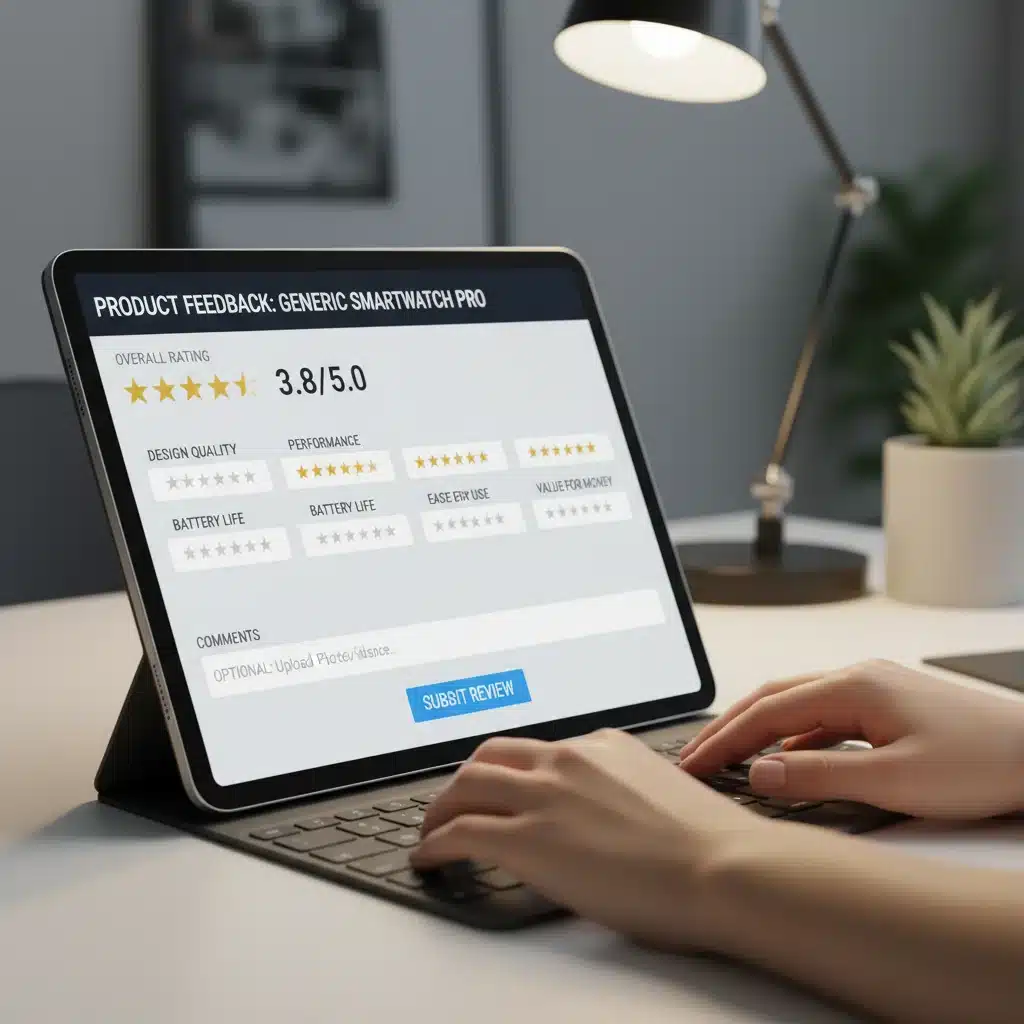
5. Visual & Auditory Evidence: Show, Don’t Just Tell
A picture (or video) is worth a thousand words, especially in product testing reviews. If allowed and appropriate, include:
- High-quality photos: Show product in use, specific features, or highlight issues.
- Short video clips: Demonstrate a bug, illustrate a complex feature, or show the product in action.
- Screenshots: For software/app testing, capture UI elements, error messages, or successful workflows.
- Audio recordings: If sound quality or noise is a factor (e.g., headphones, appliances).
Always ensure your visual/auditory evidence is clear, relevant, and directly supports your written points. This multimedia approach makes your product testing reviews significantly more impactful and easier for product teams to digest.
6. Contextual Relevance: The Real-World Scenario
Manufacturers want to know how their product performs in real-world conditions, not just in a sterile lab environment. Describe the context of your testing:
- Where did you use it? (e.g., ‘in a noisy coffee shop,’ ‘during a strenuous hike,’ ‘while cooking dinner’)
- What were the environmental factors? (e.g., ‘in low light,’ ‘in humid conditions,’ ‘with gloves on’)
- Who else was present, if relevant? (e.g., ‘my children found it easy to use,’ ‘my partner struggled with assembly’)
Providing this context makes your product testing reviews more relatable and helps manufacturers understand potential use cases and limitations.
7. Predictive Analysis: Anticipating Future Needs
Go beyond current observations and offer insights into future trends or potential product evolutions. Ask yourself:
- How might this product integrate with other technologies in the future?
- What emerging user needs could this product address with a slight modification?
- What is its longevity in a rapidly changing market?
This forward-thinking perspective showcases your strategic thinking and makes your product testing reviews invaluable for long-term product roadmapping.
Common Pitfalls to Avoid in Product Testing Reviews
1. Vagueness and Lack of Specificity
Avoid generic statements. ‘It’s hard to use’ is unhelpful. ‘The navigation menu is not intuitive; specifically, the ‘Settings’ option is buried three layers deep, requiring five clicks to access, which is frustrating for frequent adjustments’ is actionable.
2. Emotional or Biased Language
While your experience is personal, your review should strive for objectivity. Avoid overly emotional language, personal attacks, or unsubstantiated claims. Stick to observations and data. Maintain a professional tone in all your product testing reviews.
3. Over-Praising or Over-Criticizing
A balanced review is a credible review. Even the best products have areas for improvement, and the worst products usually have some redeeming qualities. Provide a fair assessment, highlighting both strengths and weaknesses.
4. Missing the Point of the Test
Always refer back to the testing brief or guidelines. Ensure your review addresses all the specific questions and areas of focus requested by the manufacturer. Deviating too far can make your product testing reviews less useful.
5. Poor Grammar and Spelling
A review riddled with errors undermines your credibility, regardless of how insightful your feedback is. Always proofread meticulously before submission. Use grammar checkers and take your time.
Boosting Your Selection Rate: Beyond the Review
Build a Strong Tester Profile
Your tester profile is your resume. Keep it updated, detailed, and honest. Highlight your areas of expertise, your experience with specific product categories, and your technical skills. A well-crafted profile is the first step to getting noticed for product testing reviews.
Engage with the Community
If the testing platform has forums or community features, participate actively. Share tips, ask questions, and offer help. This demonstrates your passion and commitment, which can be noticed by program managers.
Be Responsive and Reliable
Submit your reviews on time, respond promptly to follow-up questions, and adhere to all guidelines. Reliability is a highly valued trait in product testers.
Specialize and Become an Expert
While general testing is good, specializing in a niche (e.g., smart home devices, gaming peripherals, eco-friendly products) can make you a go-to expert for specific companies. This increases your chances of being selected for highly relevant product testing reviews.

The Future of Product Testing: AI and Beyond
As we move towards 2026, artificial intelligence will increasingly play a role in analyzing product feedback. This means that while your human insight remains paramount, structuring your product testing reviews in a clear, categorized, and data-rich manner will make them more digestible for AI-driven analytics tools. Think about using consistent terminology, clear headings, and bullet points to aid both human and machine interpretation.
Furthermore, the rise of augmented reality (AR) and virtual reality (VR) will open new avenues for product testing, allowing for virtual prototyping and simulated use cases. Testers who are comfortable with these emerging technologies and can provide feedback within these new paradigms will be highly sought after. Staying abreast of technological advancements in product design and user interaction will keep your product testing reviews relevant and cutting-edge.
Conclusion: Your Path to Elite Product Testing
Becoming an elite product tester and consistently getting selected for opportunities is not about luck; it’s about skill, strategy, and dedication. By implementing these advanced techniques for crafting product testing reviews, you will not only provide more valuable feedback to manufacturers but also significantly enhance your personal brand as a tester. Remember to document thoroughly, structure your reviews logically, delve into the ‘why’ behind your observations, use quantifiable data, and leverage multimedia evidence. Avoid common pitfalls like vagueness and bias, and always strive for professionalism and reliability.
Embrace the evolution of product testing, stay curious, and continuously refine your approach. By doing so, you’ll not only achieve that 30% increase in selection rate but also establish yourself as a vital contributor to the development of exceptional products in 2026 and beyond. Your insightful product testing reviews are the key to unlocking a world of exciting new products and opportunities.