AI’s Impact on Product Testing: What Testers Need to Know for 2026 and Beyond
Anúncios
The Impact of AI on Product Testing: What Testers Need to Know for 2026 and Beyond
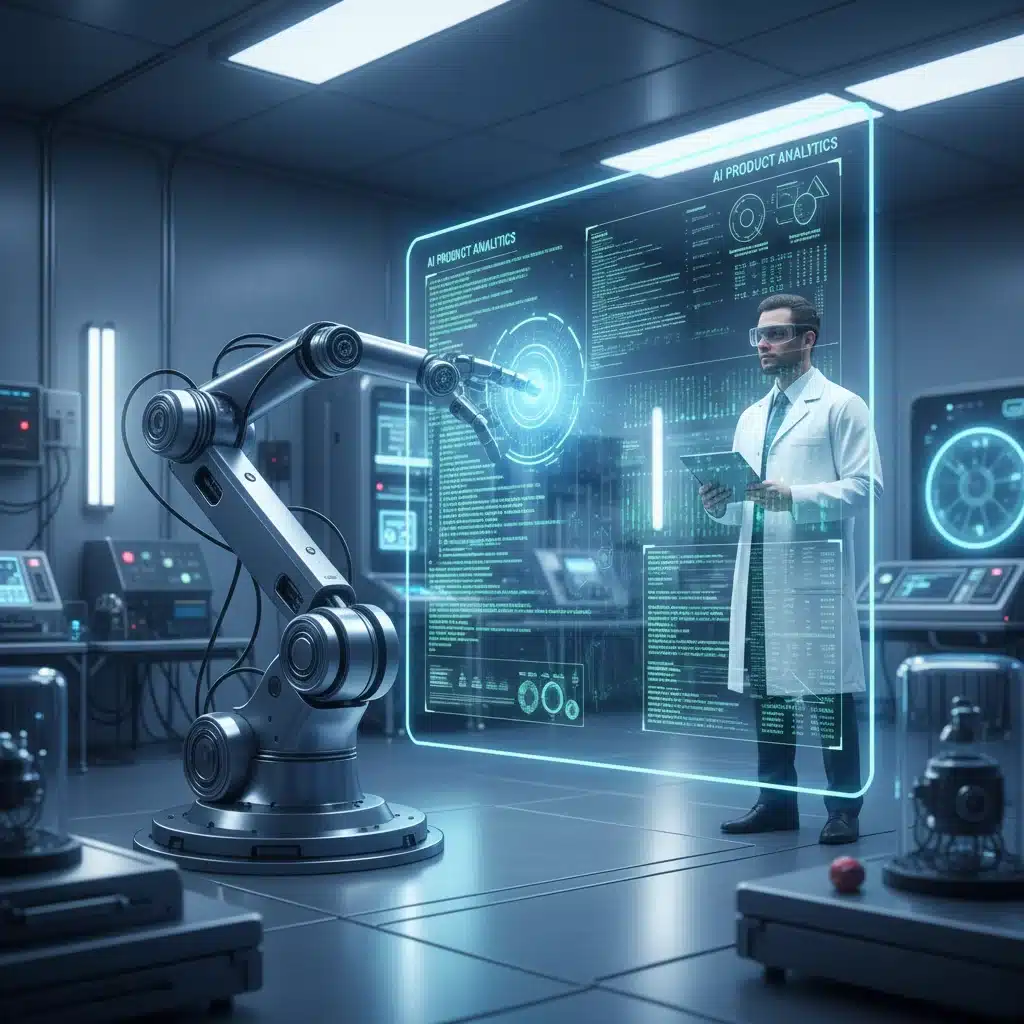
The world of technology is in constant flux, and few forces are shaping its future as profoundly as Artificial Intelligence (AI). From autonomous vehicles to personalized healthcare, AI is redefining what’s possible. Its transformative power isn’t limited to product development; it’s also revolutionizing how we ensure the quality and reliability of these innovations. For product testers, this seismic shift presents both challenges and unparalleled opportunities. As we look towards 2026 and beyond, understanding the impact of AI on product testing is not just advantageous – it’s imperative for survival and success in the evolving landscape of quality assurance (QA).
The traditional testing paradigm, often characterized by manual, repetitive tasks and script-based automation, is giving way to a more intelligent, adaptive, and predictive approach. AI is not merely a tool; it’s becoming an integral partner in the testing process, capable of identifying patterns, predicting defects, and even generating test cases autonomously. This article will delve deep into the multifaceted ways AI is reshaping product testing, equipping you with the knowledge and foresight to navigate this exciting new era. We’ll explore the current state of AI in QA, forecast future trends, outline the essential skills testers will need, and discuss strategies for embracing this technological evolution.
Anúncios
The Current Landscape: AI’s Foothold in QA
AI’s presence in product testing is no longer a futuristic concept; it’s a rapidly developing reality. Organizations are increasingly leveraging AI to enhance efficiency, improve coverage, and accelerate time-to-market. The applications are diverse and growing, touching various facets of the testing lifecycle.
Anúncios
Intelligent Test Case Generation and Optimization
One of the most significant advancements brought by AI is its ability to generate and optimize test cases. Traditional test case design can be time-consuming and prone to human oversight. AI algorithms, particularly those employing machine learning (ML), can analyze vast amounts of data – including historical defect logs, user behavior patterns, and application code – to identify critical test scenarios that might otherwise be missed. This capability extends to prioritizing test cases based on risk, impact, and frequency of use, ensuring that the most crucial areas are thoroughly vetted.
For instance, AI can learn from past failures to predict where new defects are likely to occur, guiding testers to focus their efforts on high-risk areas. This not only improves test coverage but also significantly reduces the effort involved in maintaining and updating test suites.
Predictive Analytics for Defect Prevention
Beyond identifying existing defects, AI is proving invaluable in predicting potential future flaws. By analyzing code changes, developer commit histories, and even communication patterns within development teams, AI models can forecast the likelihood of defects emerging in specific modules or functionalities. This proactive approach allows teams to address vulnerabilities before they manifest as costly bugs in later stages of development or, worse, in production. Predictive analytics helps shift the QA paradigm from reactive defect detection to proactive defect prevention, a core tenet of modern software development.
Enhanced Test Automation and Script Maintenance
While test automation has been a staple in QA for years, AI elevates it to new heights. AI-powered automation tools can learn from UI changes, automatically update test scripts, and adapt to dynamic application environments. This significantly reduces the burden of test script maintenance, a notorious pain point in traditional automation. Furthermore, AI can assist in creating more robust and resilient automated tests by understanding the underlying structure and behavior of the application, rather than just relying on fixed selectors.
Performance and Security Testing with AI
AI is also making inroads into specialized testing domains like performance and security. In performance testing, AI can simulate realistic user loads, identify performance bottlenecks with greater precision, and even suggest optimal configurations based on usage patterns. For security testing, AI-driven tools can detect anomalies, identify potential attack vectors, and learn from past exploits to strengthen security postures. This is particularly crucial in an era where cyber threats are becoming increasingly sophisticated.
The Future of Product Testing: 2026 and Beyond
Looking ahead to 2026 and beyond, the integration of AI into product testing will deepen and broaden. We can anticipate several key trends that will redefine the roles and responsibilities of QA professionals.
Autonomous Testing Systems
The vision of fully autonomous testing systems, while still some way off, will move closer to reality. These systems will be capable of understanding requirements, designing test strategies, executing tests, analyzing results, and even reporting defects with minimal human intervention. Testers will transition from executing tests to overseeing these autonomous systems, validating their outputs, and intervening in complex, ambiguous scenarios that still require human intuition and critical thinking.
AI-Driven Exploratory Testing
Exploratory testing, traditionally a human-centric activity, will be augmented by AI. AI agents could explore application interfaces, identifying unusual interactions or edge cases that might escape structured test plans. These AI-powered exploratory tools won’t replace human creativity but will serve as powerful assistants, expanding the scope and depth of exploration and allowing human testers to focus on more nuanced and complex qualitative aspects.
Hyper-Personalized Testing
As products become more personalized, so too will testing. AI will enable hyper-personalized testing strategies that mimic individual user behaviors and preferences. This means testing against a myriad of user profiles, device configurations, and environmental conditions, ensuring a truly tailored and robust user experience. This level of personalization would be impractical, if not impossible, to achieve with traditional methods.
Integration with DevOps and MLOps
AI in testing will become seamlessly integrated into DevOps and MLOps pipelines. This means continuous testing will evolve to continuous intelligent testing, where AI constantly monitors, learns, and adapts the testing process in real-time within the CI/CD framework. For AI-driven products, MLOps will ensure that the AI models themselves are rigorously tested for bias, fairness, performance, and robustness throughout their lifecycle.

Essential Skills for Product Testers in the AI Era
The advent of AI does not signal the end of the testing profession; rather, it heralds a transformation of the role. Testers who adapt and acquire new skills will be indispensable. Here are the key competencies that will define the successful QA professional in 2026 and beyond:
Understanding of AI/ML Fundamentals
Testers don’t need to become AI engineers, but a foundational understanding of AI and ML concepts is crucial. This includes knowing how AI algorithms work, the types of data they consume, how models are trained and evaluated, and common challenges like bias and overfitting. This knowledge will enable testers to effectively interact with AI-powered testing tools, interpret their outputs, and identify potential issues within the AI models themselves if they are part of the product under test.
Data Science and Analytics
AI thrives on data, and so will AI-driven testing. Testers will need strong data analysis skills to interpret the vast amounts of data generated by AI testing tools. This includes understanding metrics, identifying trends, and drawing actionable insights from complex datasets. Familiarity with data visualization tools and basic statistical concepts will become increasingly important.
Critical Thinking and Problem Solving
While AI can automate many routine tasks, complex problem-solving and critical thinking will remain uniquely human strengths. Testers will be challenged to analyze ambiguous situations, understand the ‘why’ behind AI-identified issues, and devise creative solutions. They will need to question AI’s assumptions and outputs, ensuring that the technology is serving its intended purpose without introducing new vulnerabilities.
Test Strategy and Design for AI Systems
Designing tests for AI-powered products presents unique challenges. Testers will need to develop strategies for testing AI model robustness, fairness, explainability, and resistance to adversarial attacks. This requires a different mindset than traditional functional testing, focusing on the probabilistic and adaptive nature of AI. Understanding concepts like ‘model drift’ and ‘data poisoning’ will be vital.
Collaboration and Communication
The future of QA will be highly collaborative, with testers working closely with data scientists, AI engineers, and product managers. Strong communication skills will be essential to articulate testing needs, explain AI-generated insights, and facilitate cross-functional problem-solving. Testers will act as a bridge between technical AI teams and business stakeholders.
Ethical AI Considerations
As AI becomes more prevalent, ethical considerations become paramount. Testers will play a crucial role in ensuring that AI systems are fair, transparent, and unbiased. This involves actively testing for algorithmic bias, privacy concerns, and societal impact. Understanding ethical AI frameworks and regulations will be an increasingly important aspect of the tester’s role.
Challenges and Opportunities for Testers
The transition to AI-driven testing is not without its hurdles, but these challenges are often accompanied by significant opportunities for growth and innovation.
Challenges
- Skill Gap: The rapid pace of AI adoption can create a skill gap within existing QA teams, requiring significant investment in training and upskilling.
- Tooling and Integration: Selecting the right AI testing tools and integrating them effectively into existing workflows can be complex and costly.
- Trust in AI: Building trust in AI-generated test results and defect predictions requires careful validation and a deep understanding of the AI’s capabilities and limitations.
- Data Quality: AI models are only as good as the data they’re trained on. Ensuring high-quality, representative data for testing AI systems is a significant challenge.
- Explainability: Understanding why an AI made a particular decision (the ‘black box’ problem) can be difficult, making debugging and root cause analysis more complex.
Opportunities
- Increased Efficiency and Coverage: AI can significantly accelerate testing cycles and improve test coverage, leading to higher quality products and faster time-to-market.
- Strategic Role of QA: As AI handles more routine tasks, testers can elevate their role to more strategic activities, focusing on complex problem-solving, risk management, and holistic quality assurance.
- Career Advancement: Testers who embrace AI will find themselves at the forefront of innovation, opening doors to new and exciting career paths within the tech industry.
- Better Product Quality: By leveraging AI’s predictive capabilities, organizations can achieve unprecedented levels of product quality, leading to greater customer satisfaction and brand loyalty.
- Innovation in Testing Practices: AI fosters a culture of continuous improvement and innovation within the QA domain, encouraging the exploration of new methodologies and tools.
Strategies for Embracing AI in Product Testing
To thrive in the AI-driven testing landscape, organizations and individual testers must adopt proactive strategies. Here’s how to prepare for 2026 and beyond:
Invest in Continuous Learning and Upskilling
For individual testers, continuous learning is non-negotiable. This means dedicating time to understanding AI and ML fundamentals, data analytics, and new testing methodologies for AI systems. Online courses, certifications, workshops, and industry conferences will be invaluable resources. Organizations should foster a learning culture, providing resources and opportunities for their QA teams to upskill.
Start Small with Pilot Projects
Instead of a big-bang approach, organizations should consider starting with small pilot projects to integrate AI into specific testing areas. This allows teams to gain experience, understand the nuances of AI tools, and demonstrate value before scaling up. Focus on areas where AI can provide immediate, tangible benefits, such as test case optimization or predictive defect analytics.
Foster Cross-Functional Collaboration
Break down silos between QA, development, data science, and product teams. Encourage regular communication and collaboration to ensure a holistic approach to quality. Testers should actively participate in discussions about AI model design, data collection, and deployment strategies to embed quality from the outset.
Evaluate and Adopt Appropriate AI Tools
The market for AI-powered testing tools is growing rapidly. Organizations should carefully evaluate different solutions, considering their specific needs, existing infrastructure, and budget. Look for tools that offer good integration capabilities, scalability, and strong support. Remember that AI tools are meant to augment, not replace, human intelligence.
Develop a Data Strategy for Testing
Since AI relies heavily on data, developing a robust data strategy for testing is crucial. This involves identifying relevant data sources, ensuring data quality and integrity, and establishing processes for data collection, storage, and management. High-quality testing data will be the fuel for effective AI-driven QA.
Embrace a Growth Mindset
The most important strategy is to cultivate a growth mindset. The landscape of product testing will continue to evolve, and testers must be open to new ideas, technologies, and ways of working. Embracing change, being adaptable, and viewing challenges as opportunities for innovation will be key to long-term success.
Conclusion
The impact of AI on product testing is profound and irreversible. As we advance towards 2026 and beyond, AI will transform testing from a reactive process into a proactive, intelligent, and highly efficient discipline. For product testers, this isn’t a threat but an invitation to evolve, to acquire new skills, and to elevate their role within the software development lifecycle. By understanding the current applications of AI, anticipating future trends, and proactively developing the necessary competencies, QA professionals can not only navigate this change but also become leaders in shaping the future of quality assurance. The future of product testing is intelligent, collaborative, and incredibly exciting – are you ready to be a part of it?