Mastering Product Reviews: Get Invited to Elite Programs

Anúncios
Advanced Techniques: Writing Product Reviews That Get You Invited to 50% More Elite Programs
In today’s highly competitive digital landscape, merely writing a product review isn’t enough. To truly stand out, attract the attention of top brands, and secure coveted invitations to elite product testing and influencer programs, you need to master the art of the advanced product review. This isn’t just about sharing your opinion; it’s about crafting compelling, insightful, and data-driven content that demonstrates your expertise, professionalism, and value to brands. This comprehensive guide will delve into the advanced techniques necessary to transform your reviews from good to extraordinary, significantly increasing your chances of joining those exclusive circles.
The journey to becoming a sought-after reviewer for elite programs begins with understanding what brands truly look for. It’s more than just a positive rating; they seek authentic, detailed, and constructive feedback that can help them improve their products, understand their market, and ultimately, drive sales. By integrating strategic elements and a professional approach, you can position yourself as an invaluable asset in the product development and marketing ecosystem. Let’s explore how to achieve this product review mastery.
Anúncios
Understanding the ‘Elite Program’ Mindset: What Brands Really Want
Before you even begin writing, it’s crucial to understand the perspective of the brands running these elite programs. They’re not just looking for free advertising; they’re investing in valuable feedback, authentic advocacy, and long-term relationships with influential voices. Here’s a breakdown of their priorities:
- Authenticity and Credibility: Brands can spot a fake review a mile away. They want genuine experiences and honest opinions, even if they include constructive criticism. Your credibility is your most valuable asset.
- Depth and Detail: Superficial reviews offer little value. Elite programs seek reviewers who can articulate their experience with precision, covering features, benefits, performance, and user experience in detail.
- Constructive Feedback: A perfect 5-star review without any substance is less useful than a 4-star review that thoughtfully identifies areas for improvement. Brands use this feedback for product iteration.
- High-Quality Content: This includes well-written text, excellent photography, and potentially video content. Professional presentation reflects positively on the brand.
- Audience Engagement: Brands look for reviewers who can not only create great content but also engage their audience, sparking conversations and influencing purchasing decisions.
- Timeliness and Reliability: Meeting deadlines and consistently delivering high-quality reviews builds trust and demonstrates professionalism.
By aligning your review strategy with these brand expectations, you lay the groundwork for becoming an indispensable part of their influencer network. This foundational understanding is key to unlocking advanced product review mastery.
Anúncios
Phase 1: Pre-Review Preparation & Research – The Foundation of Excellence
An elite review doesn’t start with writing; it starts long before. Thorough preparation and research are non-negotiable steps for achieving product review mastery.
1. Deep Dive into Product Specifications and Features
Don’t just skim the product description. Read the manual, visit the product’s official website, and explore all listed specifications. Understand the technology, materials, and unique selling propositions. This allows you to speak authoritatively about the product and identify key areas to test.
2. Competitor Analysis: Context is King
A truly insightful review often provides context. How does the product stack up against its direct competitors? What does it do better or worse? This demonstrates a broader understanding of the market and helps readers make informed decisions. Mentioning competitors isn’t about promoting them; it’s about highlighting the unique value of the product you’re reviewing within its landscape.
3. Identify Your Target Audience
Who is this product for? Tailor your language, examples, and focus to resonate with that specific demographic. A review for a gaming laptop will differ significantly from one for a baby monitor. Understanding your audience helps you address their specific pain points and interests, making your review more relevant and impactful.
4. Develop a Testing Methodology
How will you objectively evaluate the product? Create a list of scenarios, tasks, or metrics you’ll use to test its performance. For example, if it’s a camera, test it in various lighting conditions. If it’s software, test its compatibility with different operating systems or its performance under heavy load. A systematic approach adds scientific rigor to your review.
Phase 2: Crafting the Review – Advanced Writing & Storytelling Techniques
Once you’ve done your homework, it’s time to write. But this isn’t just about listing pros and cons. It’s about storytelling, engaging your reader, and providing genuine value. This is where true product review mastery shines.
1. The Engaging Introduction: Hook Your Audience
Forget generic intros. Start with a compelling hook: a problem the product solves, a bold statement about its innovation, or a personal anecdote related to its use. Immediately capture the reader’s attention and set the stage for what’s to come. Clearly state the product you’re reviewing and its primary purpose.
2. Structure for Readability and SEO
Even the most insightful review won’t be read if it’s a wall of text. Use:
- Clear Headings and Subheadings (H2, H3): Break up your content into digestible sections. This improves readability and is excellent for SEO.
- Bullet Points and Numbered Lists: Ideal for features, pros, cons, and step-by-step instructions.
- Short Paragraphs: Keep paragraphs concise to maintain reader engagement.
- Bold Text: Highlight key takeaways, product names, and important features.
Ensure your chosen keyword, ‘product review mastery’, is naturally integrated throughout your headings and body text, but never over-optimize to the point of sounding unnatural.
3. Beyond Features: Focus on Benefits and User Experience
While features are important, people buy benefits. Instead of just stating a feature, explain what that feature means for the user. How does it improve their life, solve a problem, or enhance an experience? Describe the emotional and practical impact of using the product. This human-centric approach elevates your reviews.
For example, instead of "This phone has a 5000mAh battery," say "The 5000mAh battery means you can go an entire day of heavy use without needing a charger, perfect for long commutes or forgetful users."
4. Integrate High-Quality Visuals and Multimedia
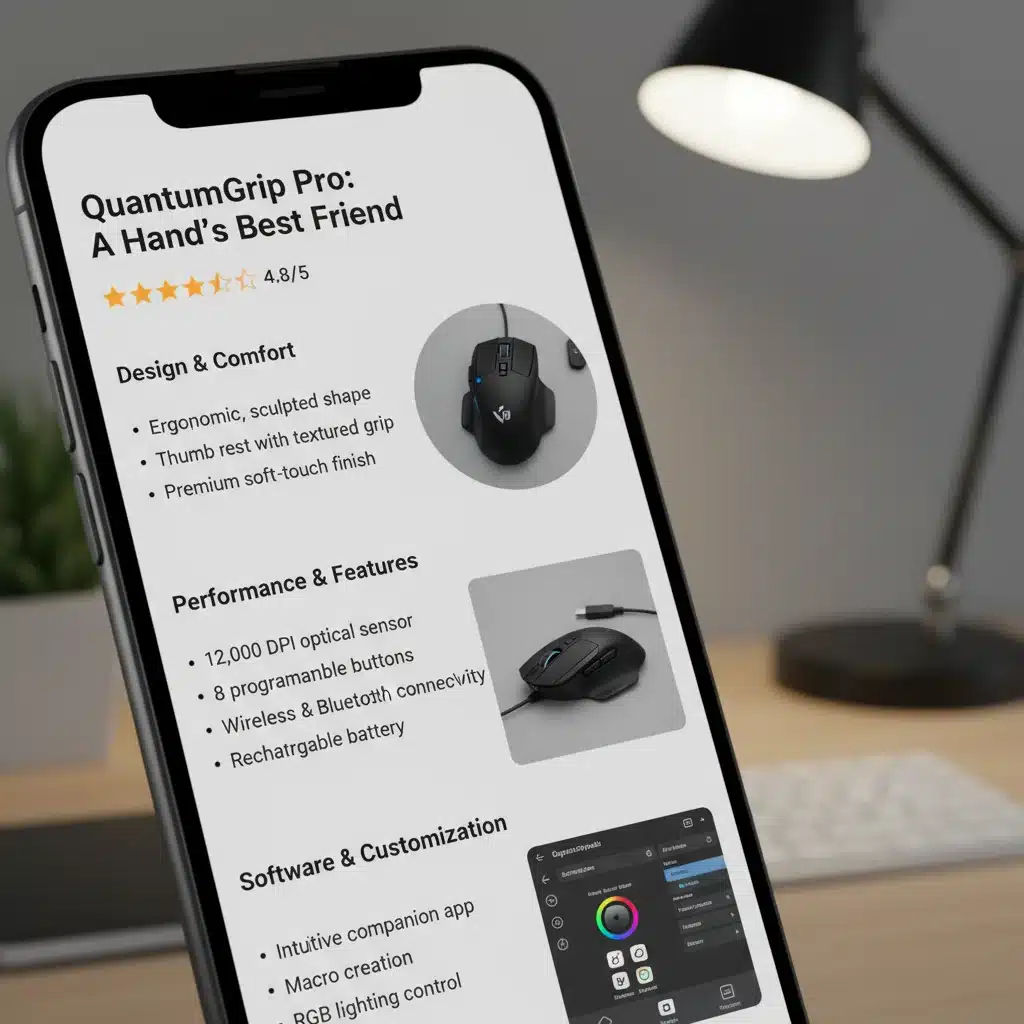
A picture is worth a thousand words, and a video is worth a thousand pictures. High-resolution, well-lit photographs from various angles are essential. Show the product in use, highlight specific features, and compare its size or design to other common objects for scale. If possible, include a short video demonstrating key functionalities or your unboxing experience. This significantly boosts engagement and provides tangible proof of your interaction with the product. Visuals are critical for achieving advanced product review mastery.
5. Data-Driven Insights and Benchmarks
For technical products, backing up your claims with data is a game-changer. Include benchmark scores (e.g., for processors, graphics cards), battery life tests, speed tests, or any other quantifiable metrics. This adds an undeniable layer of authority and objectivity to your review, making it far more valuable to brands who appreciate analytical feedback.
6. The "Who Is This For?" Section
A highly effective advanced technique is to include a dedicated section answering "Who is this product best suited for?" and "Who might want to look elsewhere?" This demonstrates a nuanced understanding of the product’s market positioning and helps readers self-qualify, building trust and credibility. It shows you’re not just blindly promoting but genuinely guiding consumers.
Phase 3: The Art of Constructive Criticism & Balanced Perspective
No product is perfect. Elite reviewers understand that honest, constructive criticism is often more valuable than pure praise. This is a cornerstone of product review mastery.
1. Frame Criticism Positively
Instead of saying "The battery life is terrible," try "While the battery life is sufficient for light use, power users might find themselves reaching for a charger by late afternoon. An improvement in this area could elevate the user experience significantly." This approach is helpful to the brand and informative for the reader.
2. Suggest Solutions or Alternatives
Go a step further by suggesting how a perceived flaw could be mitigated or improved. "The lack of a dedicated macro lens could be addressed by including a clip-on option in future models, offering more versatility to mobile photographers." This demonstrates thoughtfulness and a genuine interest in product improvement.
3. Maintain Objectivity
Separate your personal preferences from objective observations. What might be a drawback for you might be a non-issue for another user. Clearly delineate between subjective experience and universal product performance.
Phase 4: Post-Publication Engagement & SEO Optimization
Your work isn’t done once the review is published. Maximizing its reach and impact is crucial for attracting those elite program invitations. This final stage is vital for complete product review mastery.
1. SEO Best Practices for Reviews
- Keyword Integration: Beyond the main keyword ‘product review mastery’, naturally incorporate long-tail keywords that potential buyers might use (e.g., "best [product type] for [specific use]").
- Meta Description: Craft a compelling meta description that encourages clicks from search results.
- Internal and External Linking: Link to other relevant reviews you’ve written (internal) and to the official product page or reputable retailers (external).
- Image Optimization: Use descriptive alt text and optimize image file sizes for faster loading.
- Schema Markup: If your platform allows, implement review schema markup to help search engines understand your content and potentially display rich snippets.
2. Promote Your Review
Share your review across all relevant social media platforms, forums, and communities. Engage with comments and questions. The more visibility and discussion your review generates, the more attractive it becomes to brands.
3. Track Performance and Analytics
If you have access to analytics (e.g., Google Analytics for your blog), monitor traffic, engagement rates, and conversion metrics (if applicable). Understanding what resonates with your audience allows you to refine your strategy for future reviews. Being able to present these metrics to a brand can be a powerful differentiator.
4. Build Relationships with Brands
Once you’ve published a stellar review, don’t be afraid to tag the brand on social media or send them a polite email with a link to your work. Highlight the depth of your analysis and your commitment to providing valuable feedback. This direct engagement can often be the bridge to an elite program invitation.
Case Study: The Transformative Power of Advanced Reviews
Consider the example of Sarah, a tech enthusiast who initially wrote basic reviews. She would simply list features and give a star rating. Her engagement was low, and brand collaborations were rare. After adopting the principles of product review mastery, her approach changed dramatically.
For a new smart home device, instead of just saying "It connects to Wi-Fi," she explained the setup process in detail, troubleshooting common issues, and comparing its connection stability to three other popular devices. She included screenshots of the app interface, a short video demonstrating voice commands, and a "Who Is This For?" section that clearly delineated its ideal user.
She also analyzed the privacy implications of the device, a topic often overlooked in casual reviews. Her review garnered significantly more traffic, comments, and shares. Within a month, the brand’s PR team reached out, impressed by her thoroughness and insightful critique, inviting her to their exclusive beta testing program for upcoming products. This wasn’t a fluke; it was the direct result of applying advanced review techniques.
Common Pitfalls to Avoid in Your Quest for Elite Programs
Even with the best intentions, some reviewers fall into traps that hinder their progress:
- Lack of Originality: Simply rehashing what others have said won’t make you stand out. Find your unique angle.
- Overly Positive Bias: While enthusiasm is good, a review that only praises without any critical thought lacks credibility.
- Poor Grammar and Spelling: Professionalism starts with error-free writing. Proofread meticulously.
- Inconsistent Posting: Brands look for consistent contributors. Maintain a regular schedule.
- Ignoring Audience Feedback: Your readers are a valuable resource. Listen to their questions and suggestions.
- Being a "Product Collector": If your only goal is to get free products, brands will see through it. Focus on providing value.
Avoiding these common mistakes is as important as implementing the advanced strategies. It ensures your path to product review mastery remains clear and effective.
The Future of Product Reviews: What’s Next?
The landscape of product reviews is constantly evolving. As AI and augmented reality become more prevalent, reviewers who can integrate these technologies into their content will gain an even greater edge. Imagine an AR review that allows users to "try on" a product virtually or an AI-powered analysis of product performance based on aggregated user data. Staying abreast of technological trends and being willing to experiment with new formats will keep you at the forefront of product review mastery.
Furthermore, the emphasis on ethical reviewing and transparency will only grow. Disclosing sponsorships, maintaining editorial independence, and prioritizing the consumer’s best interest will be paramount for long-term success and trust with both audiences and brands. Your integrity is the bedrock upon which your elite reviewer status will be built.
Conclusion: Elevate Your Review Game and Unlock Opportunities
Achieving product review mastery is a journey that requires dedication, continuous learning, and a commitment to excellence. By moving beyond superficial evaluations and embracing deep research, compelling storytelling, data-driven insights, and strategic promotion, you can transform your reviews into powerful tools for influence and opportunity.
Remember, brands are actively seeking passionate, articulate, and reliable voices to champion their products and provide invaluable feedback. By consistently delivering high-quality, insightful, and engaging content, you not only serve your audience but also position yourself as an indispensable partner for brands. Start implementing these advanced techniques today, and watch as your invitations to elite programs soar, solidifying your reputation as a top-tier product reviewer.
The path to becoming an elite reviewer is paved with meticulous preparation, thoughtful analysis, and a genuine desire to provide value. Embrace these advanced strategies, and you’ll not only enhance your own platform but also contribute meaningfully to the product development cycle, creating a win-win situation for everyone involved. Your next elite program invitation could be just one exceptional review away.