Boost Product Testing Acceptance: Master Profile Optimization 2026

Anúncios
Insider Knowledge: How to Increase Your Product Testing Acceptance Rate by 25% in 2026 with Advanced Profile Optimization
Are you an aspiring product tester struggling to get accepted into the programs you desire? Do you feel like your applications disappear into a black hole, never to be heard from again? You’re not alone. In the competitive world of product testing, standing out is crucial. Companies are constantly seeking the most relevant and reliable testers to provide invaluable feedback on their upcoming products. This comprehensive guide will equip you with insider knowledge and advanced strategies to significantly increase your product testing acceptance rate, aiming for an impressive 25% boost by 2026 through meticulous profile optimization.
The landscape of product testing is evolving. With sophisticated AI and data analytics guiding recruitment, generic profiles are no longer sufficient. To truly excel, you need to understand what companies are looking for and how to present yourself as the ideal candidate. This article delves deep into the nuances of profile optimization, offering actionable insights that go beyond the basics. We’ll explore everything from initial demographic inputs to demonstrating your value through detailed feedback examples, ensuring your profile shines brighter than the rest.
Understanding the Product Testing Ecosystem: Why Your Profile Matters
Before diving into optimization techniques, it’s essential to grasp the fundamental role your profile plays. Think of your product testing profile as your digital resume. It’s the first, and often only, impression you make on recruitment algorithms and human screeners. A well-crafted profile doesn’t just list your attributes; it tells a story about your expertise, your reliability, and your genuine interest in contributing to product development. Companies are not just looking for bodies to test products; they’re searching for engaged consumers who can articulate their experiences clearly and constructively.
Anúncios
The goal of any product testing program is to gather diverse and actionable insights. This means companies are looking for specific demographics, usage patterns, technical proficiencies, and even personality traits. Your profile is the vehicle through which you communicate all of this. A poorly optimized profile might accurately reflect who you are, but if it doesn’t align with what the recruitment systems are programmed to find, your chances of increasing your product testing acceptance are slim.
The Evolution of Tester Recruitment: AI and Data-Driven Matching
Gone are the days when companies simply picked testers from a general pool. Today, many platforms leverage advanced algorithms to match products with the most suitable testers. These algorithms analyze vast amounts of data from your profile, looking for keywords, behavioral patterns, and consistency. They can identify gaps, inconsistencies, or even generic responses that might flag you as a less ideal candidate. Understanding this shift is the first step towards mastering your profile and boosting your product testing acceptance rate.
For example, if a company is launching a new smartwatch, their algorithm might prioritize users who have listed ‘wearable technology’ as an interest, own specific smartphone brands, engage in fitness activities, and have a history of providing detailed feedback on tech products. If your profile is vague or lacks these specific details, you’ll likely be overlooked. Therefore, the key to success lies in proactively tailoring your profile to meet these evolving demands, ensuring every piece of information contributes to a compelling narrative that resonates with recruitment systems.
Phase 1: The Foundation – Meticulous Demographic and Lifestyle Profiling
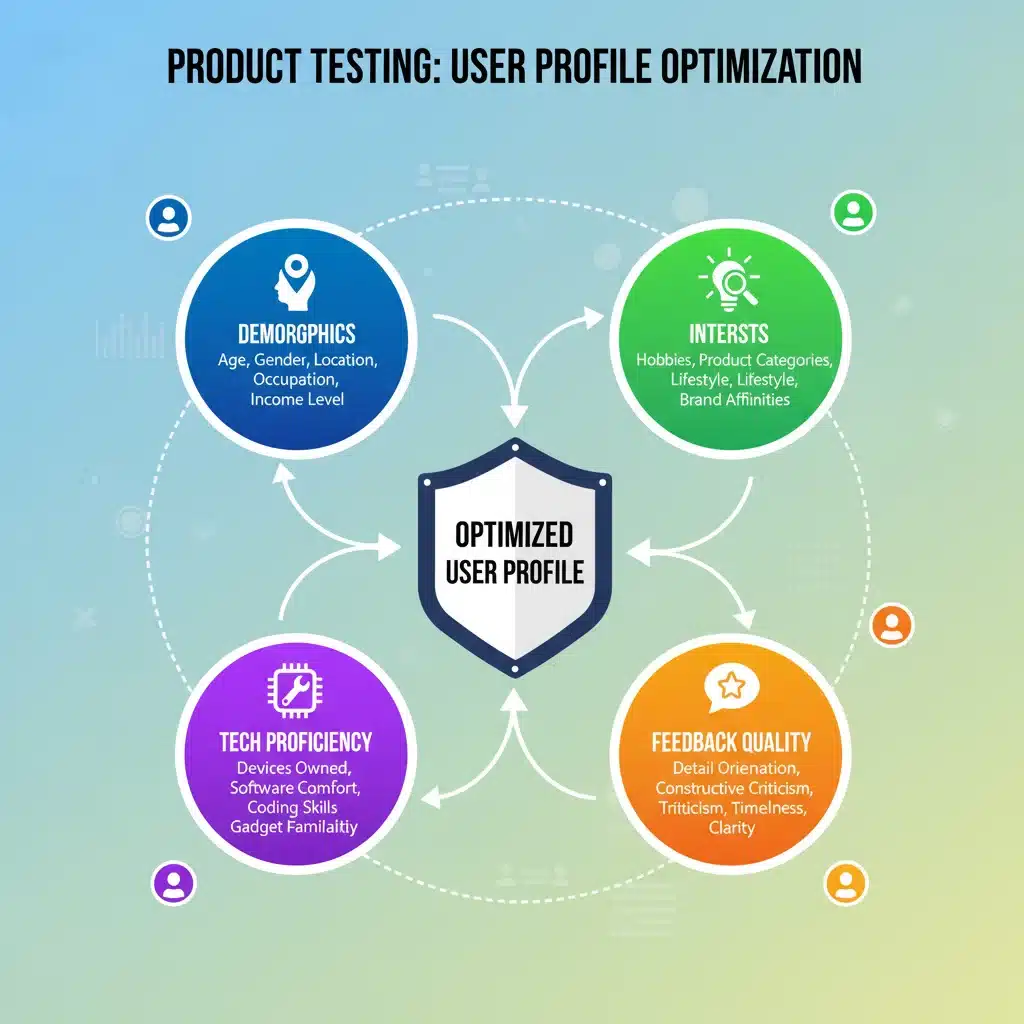
The bedrock of a strong product testing profile is accurate and comprehensive demographic and lifestyle information. This isn’t just about age and location; it extends to your household income, living situation, pet ownership, dietary habits, and even your preferred modes of transportation. Every detail can be a crucial data point for a product. For instance, a pet food company needs pet owners, an appliance company needs homeowners, and a baby product company needs parents or guardians.
Completeness is Key: Fill Every Field
One of the most common mistakes testers make is leaving profile fields blank or providing minimal information. Every empty field is a missed opportunity to demonstrate your relevance. Go through your profile with a fine-tooth comb and ensure every question is answered thoroughly and accurately. If a question doesn’t apply to you, consider if there’s an equivalent or related piece of information you can provide in an open-ended section. A complete profile signals diligence and a serious approach to product testing, directly impacting your product testing acceptance.
Accuracy and Consistency: Your Digital Fingerprint
Beyond completeness, accuracy and consistency are paramount. Providing conflicting information across different sections or updating details erratically can raise red flags for automated systems. For example, if you list yourself as a ‘tech enthusiast’ but then indicate low proficiency with common software, it creates an inconsistency. Regularly review your profile to ensure all information is up-to-date and reflects your current situation. A consistent and accurate profile builds trust and makes you a more reliable candidate in the eyes of recruiters.
Anúncios
Detailed Lifestyle Insights: Beyond the Obvious
Think about the products you use daily. What hobbies do you have? What are your purchasing habits? Do you travel frequently? These lifestyle insights are goldmines for companies. Instead of just saying ‘I like to read,’ specify ‘I read digital books on my e-reader and listen to audiobooks during my commute.’ This level of detail provides a much richer picture of your consumer behavior and makes you a more attractive candidate for relevant product tests, thereby increasing your product testing acceptance potential.
Phase 2: Advanced Interest and Proficiency Optimization
Once your foundational demographic data is solid, the next step is to strategically optimize your interests and proficiencies. This is where you differentiate yourself from the general pool and demonstrate your unique value as a tester. Don’t just list generic interests; delve into specifics that align with high-demand product categories.
Specificity in Interests: The Niche Advantage
Instead of broadly stating ‘technology,’ refine it to ‘smart home devices,’ ‘virtual reality gaming,’ or ‘sustainable tech gadgets.’ If you enjoy cooking, specify ‘gourmet cooking with smart kitchen appliances’ or ‘plant-based meal preparation.’ Niche interests make you highly relevant for specialized tests and significantly boost your product testing acceptance rate for those particular products.
Consider creating a mental map of products you’d genuinely love to test. Then, reverse-engineer the interests and skills required for those products and ensure they are prominently featured in your profile. This proactive approach ensures you’re not just waiting for opportunities but actively shaping your profile to attract them.
Demonstrating Technical Proficiency: More Than Just Self-Assessment
Many profiles ask you to rate your technical proficiency. While self-assessment is a start, try to back it up with concrete examples if possible. If you rate yourself as ‘expert’ in a certain software, consider mentioning specific projects or experiences that justify this claim in an open-ended section. For hardware, list the devices you own and actively use. For example, instead of ‘high tech proficiency,’ state ‘proficient with iOS and Android ecosystems, experienced in troubleshooting network issues, and regular user of smart home hubs like Amazon Echo and Google Home.’ This level of detail is invaluable for increasing your product testing acceptance for technical products.
Language Skills and Cultural Nuances
If you’re bilingual or multilingual, highlight this. Companies often test products for global markets and value testers who can provide feedback from different linguistic and cultural perspectives. Even if a test is in English, understanding cultural nuances can be a significant advantage, especially for products targeting specific international demographics.
Phase 3: The Feedback Factor – Showcasing Your Value
This is arguably the most critical phase for increasing your product testing acceptance. Companies don’t just want users; they want insightful users. Your ability to provide clear, constructive, and actionable feedback is your most valuable asset. Many platforms have sections where you can demonstrate your feedback style or rate your past performance. Maximize these opportunities.
Quality Over Quantity: The Art of Constructive Criticism
When providing feedback, whether in actual tests or in hypothetical scenarios within your profile, focus on quality. A good piece of feedback isn’t just ‘I liked it’ or ‘I didn’t like it.’ It explains why. For example, instead of ‘The app was confusing,’ try ‘The navigation flow from the home screen to the settings menu was unclear because the icon was not intuitively placed, leading to user frustration.’ This demonstrates analytical thinking and a user-centric perspective.
Structure your feedback with:
- Observation: What did you notice?
- Impact: How did it affect your experience?
- Suggestion (if applicable): How could it be improved?
This approach makes your feedback incredibly valuable to product developers and significantly enhances your profile’s appeal, boosting your product testing acceptance chances.
Timeliness and Reliability: Your Professionalism Score
Consistently submitting feedback on time, or even early, signals reliability. Platforms often track your response times and completion rates. A history of timely and complete submissions will make you a preferred candidate for future tests. If you commit to a test, follow through. If unforeseen circumstances arise, communicate promptly. Professionalism is a silent but powerful factor in increasing your product testing acceptance.
Engagement and Communication: Beyond the Report
Some product testing programs involve forums, surveys, or direct communication with project managers. Actively participate, ask clarifying questions, and engage constructively. This shows your dedication and interest, making you a memorable and valuable tester. Your proactive engagement can set you apart and lead to more opportunities.
Phase 4: Continuous Optimization and Strategic Application
Profile optimization isn’t a one-time task; it’s an ongoing process. The world of products and technology is constantly changing, and so should your profile. Regular updates and strategic application are crucial for maintaining a high product testing acceptance rate.
Regular Profile Audits: Stay Current
Schedule quarterly or bi-annual reviews of your entire profile. Are your devices listed still current? Have your interests evolved? Have you acquired new skills or hobbies? Update any changes to ensure your profile always reflects your most current and valuable attributes. This proactive maintenance keeps your profile fresh and relevant to new product opportunities.
Learning from Rejections: A Growth Mindset
Not every application will result in acceptance, and that’s okay. Instead of getting discouraged, view rejections as learning opportunities. While direct feedback on rejections is rare, you can often infer reasons. For example, if you consistently get rejected from tech tests, perhaps your tech proficiency section needs more detail or specific examples. Use these insights to refine your profile further, continuously improving your chances of future product testing acceptance.
Strategic Application: Quality Over Quantity
While it might be tempting to apply to every test, a more strategic approach often yields better results. Focus on tests that genuinely align with your profile and interests. If you apply to tests where you’re a perfect match, your feedback will be more authentic and valuable, leading to a higher likelihood of future invitations. This targeted approach not only saves your time but also improves your overall acceptance rate and reputation as a discerning tester.

Leveraging Advanced Strategies for a 25% Boost by 2026
To achieve a 25% increase in your product testing acceptance by 2026, you need to go beyond the standard advice. Here are some advanced strategies:
1. Diversify Your Platform Presence
Don’t put all your eggs in one basket. Sign up for multiple reputable product testing platforms (e.g., UserTesting, BetaFamily, Centercode, Testlio, independent brand communities). Each platform has its own recruitment algorithms and product focus. A well-optimized profile on several platforms exponentially increases your exposure to different types of tests and, consequently, your acceptance rate.
2. Build a Portfolio of Feedback
For platforms that allow it, or even for your own personal use, create a small portfolio of your best feedback examples. This could include screenshots with annotations, short video reviews, or well-structured written reports. While you might not directly submit this with every application, having it ready can be invaluable if a company requests more information or if you’re applying to a program that allows for more extensive self-promotion. This demonstrates a professional approach to product testing.
3. Engage with Product Communities
Participate in online forums, social media groups, and communities dedicated to specific product categories or technology. Your active engagement, thoughtful contributions, and demonstrated knowledge within these communities can sometimes lead to direct invitations for product testing, bypassing the general application process. Recruiters often scour these communities for passionate and knowledgeable individuals, seeing them as pre-qualified candidates for boosting product testing acceptance.
4. Specialize in Emerging Technologies
Keep an eye on emerging technologies like AI, augmented reality (AR), virtual reality (VR), blockchain, and advanced IoT devices. If you can develop a niche expertise in these areas and reflect it in your profile, you’ll become a highly sought-after tester. Early adopters and experts in new tech are always in high demand for beta programs, offering a significant advantage for your product testing acceptance goals.
5. Understand the ‘Why’ Behind the Product
When applying for a test, try to understand the core problem the product is trying to solve. If you can frame your potential feedback in terms of helping the company achieve its goals (e.g., ‘I can provide insights on user friction points that might hinder adoption by the target demographic’), you demonstrate a higher level of understanding and commitment. This strategic mindset can make your application stand out.
6. Leverage AI Tools (Ethically) for Profile Enhancement
While honesty is crucial, you can use AI tools (like grammar checkers or even AI writing assistants for brainstorming synonyms) to refine the language and clarity of your profile descriptions. Ensure your responses are articulate, professional, and free of errors. However, always ensure the content remains genuinely yours and accurately reflects your experiences and skills. AI can be a powerful editor, but not a replacement for authenticity.
The Future of Product Testing: What to Expect by 2026
By 2026, the product testing landscape will likely be even more sophisticated. We can anticipate:
- Hyper-Personalized Matching: AI will become even better at matching testers to products based on granular behavioral data, not just stated preferences.
- Increased Demand for Specialized Skills: As products become more complex, the need for testers with specific technical, domain, or cultural expertise will grow.
- Real-time Feedback Integration: Platforms may offer more sophisticated tools for real-time feedback capture, including biometric data or contextual usage information.
- Gamification of Testing: To encourage engagement and quality, more platforms might incorporate gamified elements, rewarding consistent, high-quality testers.
By staying ahead of these trends and continuously optimizing your profile with the strategies outlined, you’ll not only achieve your 25% increase in product testing acceptance but also position yourself as a leading voice in the consumer insights community for years to come.
Conclusion: Your Path to Enhanced Product Testing Acceptance
Increasing your product testing acceptance rate by 25% by 2026 is an ambitious yet achievable goal. It requires a strategic, meticulous, and proactive approach to profile optimization. By understanding the evolving recruitment landscape, providing comprehensive and accurate demographic information, specifying your interests and proficiencies, and consistently delivering high-quality feedback, you can transform your profile from generic to compelling. Remember, your profile is your advocate in the competitive world of product testing. Invest the time and effort into making it shine, and you will unlock a wealth of exciting opportunities to shape the future of products and technology.
Start today by reviewing your existing profiles, identifying areas for improvement, and implementing the advanced strategies discussed. Your journey to becoming a highly sought-after product tester begins with a commitment to excellence in every detail of your digital persona. Happy testing!