
The True Financial Impact of Product Testing: Optimizing Your Participation for Maximum Value in 2026 – Beyond Just Free Products
In an increasingly competitive market, the phrase ‘product testing’ often conjures images of receiving free samples or early access to new gadgets. While these perks are certainly attractive, they merely scratch the surface of the profound product testing financial impact. For both consumers and companies, engaging in product testing is not just about the immediate gratification of a free item; it’s a strategic endeavor with significant financial implications. As we look towards 2026, understanding and optimizing your participation in product testing becomes paramount for unlocking its full economic potential.
This comprehensive guide delves deep into the often-overlooked financial dimensions of product testing. We will explore how individuals can leverage their participation for more than just freebies, transforming it into a source of tangible financial benefits, skill development, and even entrepreneurial opportunities. Simultaneously, we’ll examine how businesses can harness product testing to mitigate risks, refine offerings, and ultimately drive profitability. The goal is to illuminate the path to maximizing the product testing financial impact for all stakeholders, ensuring that every hour invested and every piece of feedback provided translates into measurable value.
Beyond the Freebies: Understanding the Individual Financial Impact of Product Testing
For many, the primary allure of product testing is the promise of free products. While this is a clear benefit, it’s crucial to look beyond this superficial gain to truly appreciate the product testing financial impact on an individual level. The value derived can be multifaceted and extend far beyond the retail price of the tested item.
Anúncios
Direct Financial Compensation and Rewards
The most straightforward financial benefit, besides free products, is direct compensation. Many reputable product testing programs offer cash payments, gift cards, or points redeemable for various rewards. These can range from modest amounts for simple surveys to substantial payments for extensive, long-term testing requiring detailed feedback or even in-home usage trials. For individuals seeking to supplement their income, consistent participation in well-paying programs can contribute significantly to their financial well-being. Identifying these higher-value opportunities requires diligent research and an understanding of what different companies are willing to pay for quality insights.
Savings on Everyday Expenses
Consider the cumulative savings. If you regularly test products you would otherwise purchase – be it groceries, personal care items, electronics, or household goods – you are effectively reducing your monthly expenditure. This indirect financial benefit, while not a direct cash inflow, frees up capital that can be allocated to other financial goals, such as savings, investments, or debt repayment. Over a year, these savings can amount to hundreds, if not thousands, of dollars, making a substantial product testing financial impact on your personal budget.
Access to Premium and Innovative Products
Product testing often grants access to cutting-edge products before they hit the market. This not only provides a unique user experience but can also save you money on future purchases. By testing and influencing the development of innovative products, you might receive a high-value item that you wouldn’t have otherwise bought due to cost, or you might gain insights that prevent you from making a poor purchasing decision on a similar, less refined product later on. This early access and influence can be a significant, albeit indirect, financial perk.
Skill Development and Resume Building
While seemingly unrelated to direct finance, the skills honed through rigorous product testing can have a long-term product testing financial impact. Developing strong analytical skills, detailed observational abilities, clear communication, and report writing are all valuable in the professional world. If you consistently provide high-quality, insightful feedback, you might even be invited to specialized, higher-paying testing panels. For those looking to enter fields like market research, product development, or quality assurance, a history of successful product testing can be a valuable addition to a resume, demonstrating practical experience and a keen eye for detail.
Strategic Participation: Maximizing Your Individual Value in 2026
To truly unlock the product testing financial impact, individuals must adopt a strategic approach. It’s not enough to simply sign up for every program; thoughtful engagement is key.
Choosing the Right Programs
Not all product testing programs are created equal. Focus on platforms and companies that align with your interests, expertise, and demographic profile. If you’re passionate about technology, seek out tech testing opportunities. If you’re a parent, look for family-oriented product trials. This not only makes the testing process more enjoyable but also increases the likelihood of you being selected for high-value projects, as companies seek testers whose feedback is genuinely relevant and insightful. Research the reputation of testing platforms and read reviews to ensure they are legitimate and offer fair compensation.
Anúncios
Providing High-Quality, Detailed Feedback
The cornerstone of a successful product tester is the quality of their feedback. Generic or rushed responses provide little value to companies. Instead, strive for detailed, constructive, and actionable insights. Explain why you like or dislike a feature, describe specific user experiences, and suggest improvements. Companies are willing to pay more for testers who consistently deliver valuable data. This commitment to quality enhances your reputation as a tester, making you more likely to be selected for future, potentially more lucrative, opportunities. This directly contributes to a positive product testing financial impact for you.
Building a Tester Profile and Reputation
Many platforms allow you to build a comprehensive tester profile. Keep this updated and accurate. Include all relevant demographics, interests, and past testing experiences. A robust profile increases your visibility to companies seeking specific tester profiles. Furthermore, consistently delivering excellent feedback builds a positive reputation, which can lead to exclusive invitations to premium testing panels or long-term relationships with specific brands. These relationships are often where the most significant financial rewards lie.
Understanding the Time-Value Equation
Time is money. Before committing to a product test, evaluate the time commitment versus the potential reward. Some tests might offer a high-value product but require an extensive time investment in surveys, journaling, or video feedback. Others might offer a small cash payment for a quick, straightforward review. Prioritize tests that offer a good return on your time, ensuring that your efforts are financially worthwhile. This critical assessment is vital for maximizing your overall product testing financial impact.

The Corporate Perspective: How Businesses Harness Product Testing for Financial Gain
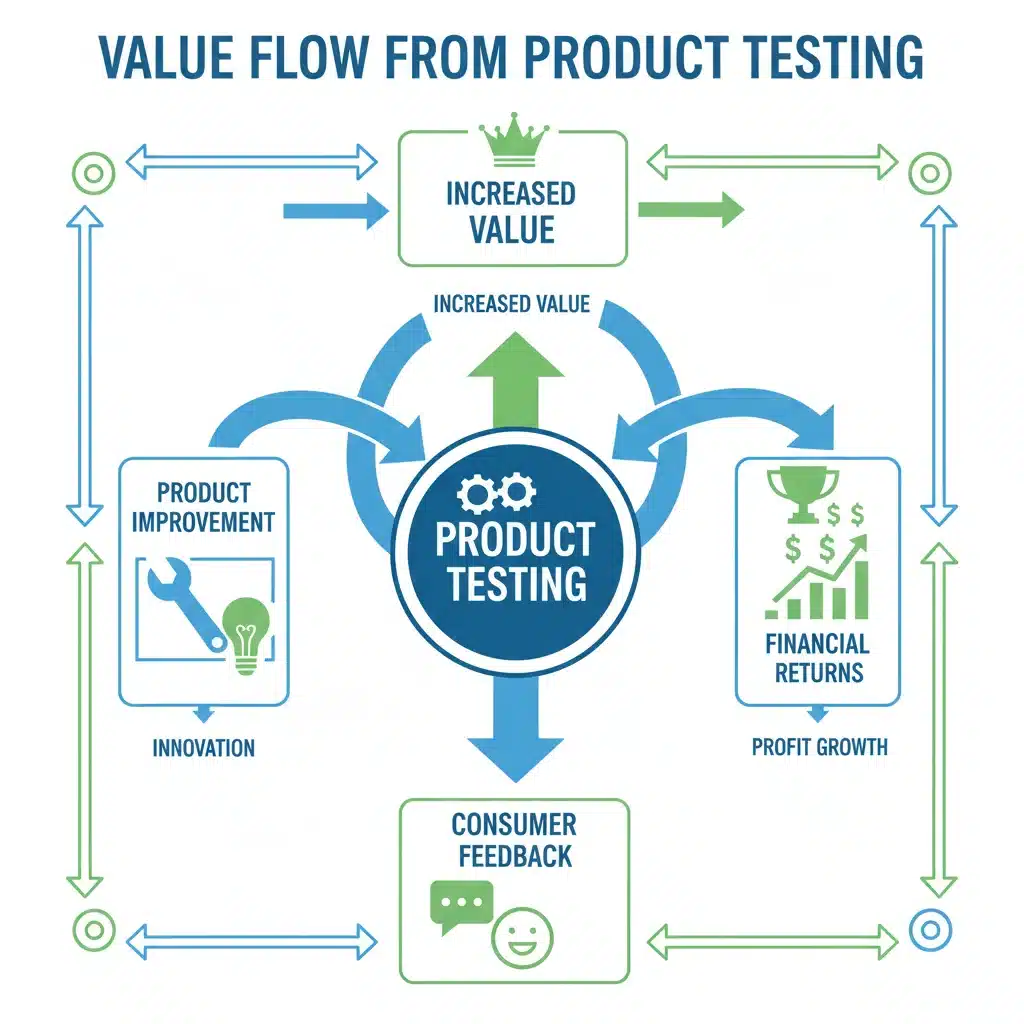
While individuals focus on personal gains, companies engage in product testing for far more substantial and complex financial reasons. The product testing financial impact on a business can be the difference between market success and failure, profitability and significant losses.
Mitigating Product Launch Risks
Launching a new product is inherently risky, with significant capital invested in research, development, manufacturing, and marketing. Product testing acts as a crucial risk mitigation strategy. By gathering feedback from a target audience before a full-scale launch, companies can identify flaws, user experience issues, and market acceptance problems. Addressing these issues pre-launch prevents costly recalls, negative publicity, and the financial drain of a product that fails to resonate with consumers. This proactive approach significantly reduces potential financial losses and enhances the likelihood of a successful, profitable launch.
Optimizing Product Development and Cost Efficiency
Early-stage product testing, often called alpha or beta testing, allows companies to iterate on designs and features based on real-world user feedback. This iterative process is far more cost-effective than making changes after a product has been mass-produced. Identifying unnecessary features, refining crucial functionalities, or simplifying complex designs based on tester input can lead to more efficient manufacturing processes, reduced material costs, and a more streamlined product that better meets consumer needs. This direct link between feedback and development efficiency underscores the significant product testing financial impact on a company’s bottom line.
Enhancing Customer Satisfaction and Brand Loyalty
Products that are thoroughly tested and refined based on user feedback are more likely to meet or exceed customer expectations. High customer satisfaction translates directly into repeat purchases, positive word-of-mouth marketing, and stronger brand loyalty. Loyal customers are less price-sensitive and more likely to advocate for the brand, reducing the need for expensive marketing campaigns to acquire new customers. This long-term relationship building, fostered by delivering superior products, has an immense and sustained product testing financial impact.
Gaining Competitive Advantage and Market Insights
Product testing provides invaluable market intelligence. By understanding how consumers interact with and perceive a new product, companies can gain insights into unmet needs, emerging trends, and competitive gaps. This data can inform strategic decisions, allowing companies to differentiate their offerings, position products effectively, and even identify opportunities for new product lines. Staying ahead of the competition through superior product development, driven by testing, is a powerful driver of financial success and market share.
Validating Marketing Claims and Messaging
Before investing heavily in advertising, companies can use product testing to validate their marketing claims. Does the product truly deliver on its promises? Do consumers understand the key benefits? Testing can help refine messaging to be more persuasive and accurate, ensuring that marketing spend is effective and generates a strong return on investment. Misleading or unverified claims can lead to consumer distrust and financial penalties, making this validation a critical component of the overall product testing financial impact.
The Future of Product Testing: Trends and Opportunities for 2026
As technology evolves and consumer behavior shifts, the landscape of product testing is continuously transforming. Looking towards 2026, several trends will amplify the product testing financial impact for both individuals and businesses.
AI and Machine Learning in Feedback Analysis
Artificial intelligence and machine learning are revolutionizing how companies process and analyze vast amounts of tester feedback. Instead of manually sifting through thousands of comments, AI can quickly identify patterns, sentiment, and key themes, providing actionable insights much faster. For testers, this could mean more targeted surveys and a quicker turnaround on feedback processing, potentially leading to more frequent testing opportunities. For companies, it means faster product iterations and more efficient resource allocation, enhancing the financial returns from testing.
Virtual and Augmented Reality Testing Environments
The rise of VR and AR technologies is opening new avenues for product testing, especially for digital products, virtual experiences, and even physical product prototypes. Testers can interact with virtual models, providing feedback on design, functionality, and user experience without the need for physical prototypes. This reduces logistical costs for companies and allows for a broader range of testing scenarios. For individuals, this might mean more diverse and engaging testing opportunities from the comfort of their homes, further expanding the reach and potential product testing financial impact.
Hyper-Personalized Testing Experiences
As data analytics become more sophisticated, companies will be able to offer hyper-personalized testing experiences. Testers will be matched with products that are perfectly aligned with their specific needs, preferences, and demographics, leading to more relevant feedback and a higher engagement rate. For individuals, this means more enjoyable and valuable testing experiences. For companies, it means higher quality, more precise data, leading to better product development and a stronger product testing financial impact.
The Gig Economy and Professional Testers
The gig economy continues to grow, and product testing is a natural fit. We may see a rise in professional product testers who treat it as a significant income stream, leveraging their expertise and reputation across multiple platforms. Companies might increasingly rely on these ‘super-testers’ for critical feedback, potentially offering higher compensation for their specialized skills and proven track record. This professionalization could significantly enhance the individual product testing financial impact for dedicated participants.
Conclusion: Embracing the Financial Potential of Product Testing
The notion that product testing is merely about receiving free items is a significant understatement of its true value. As we’ve explored, the product testing financial impact is profound and far-reaching, offering substantial benefits to both individuals and businesses. For individuals, it’s an opportunity to supplement income, save on expenses, gain access to innovative products, and even develop valuable skills that can bolster their professional careers. For companies, it’s an indispensable strategy for mitigating risks, optimizing development costs, enhancing customer satisfaction, gaining competitive advantages, and validating crucial marketing efforts.
Looking ahead to 2026, the convergence of advanced technologies like AI, VR, and sophisticated data analytics will only amplify these financial benefits. Strategic participation, characterized by careful program selection, high-quality feedback, and a clear understanding of the time-value equation, will be key for individuals to maximize their gains. Similarly, businesses that fully integrate product testing into their development lifecycle, leveraging cutting-edge tools for feedback analysis, will be best positioned for sustained profitability and market leadership.
In essence, product testing is not a peripheral activity; it is a central pillar of smart financial strategy in the modern economy. By recognizing its comprehensive financial impact and actively optimizing participation, all stakeholders can unlock a wealth of value that extends far beyond the initial exchange, contributing to a more robust and responsive marketplace.