From Survey to Solution: Influencing Product Development with User Insights 2026

Anúncios
From Survey to Solution: A Step-by-Step Guide to Influencing Product Development with Your Insights in 2026
In the rapidly evolving landscape of 2026, where technological advancements and consumer expectations shift at an unprecedented pace, the voice of the customer has become more critical than ever. Businesses that thrive are those that not only listen to their users but actively integrate those insights into their product development lifecycle. This isn’t just about collecting data; it’s about transforming raw feedback into tangible solutions that shape the products of tomorrow. This comprehensive guide will walk you through the essential steps to effectively leverage surveys and user insights for influencing product development, ensuring your feedback doesn’t just get heard, but truly drives innovation.
The journey from a simple survey response to a groundbreaking product feature is complex, yet incredibly rewarding. It requires a strategic approach, robust methodologies, and a deep understanding of how to bridge the gap between user needs and development capabilities. By mastering these techniques, you’ll empower yourself and your organization to build products that resonate deeply with your target audience, fostering loyalty, driving adoption, and ultimately, securing market leadership.
The Pivotal Role of User Insights in Modern Product Development
In 2026, the concept of "build it and they will come" is a relic of the past. Today’s market demands a "listen, iterate, and innovate" approach. User insights, particularly those gathered through well-designed surveys, are the lifeblood of this process. They provide an unfiltered view into user pain points, desires, and behaviors, offering invaluable intelligence that no internal brainstorming session can fully replicate. Effectively influencing product development hinges on your ability to harness this power.
Anúncios
Consider the competitive edge. Companies that consistently integrate user feedback into their development cycles are more likely to create products that not only meet but exceed user expectations. This leads to higher user satisfaction, reduced churn, and a stronger brand reputation. Furthermore, early and continuous user involvement helps mitigate the risks associated with product launches, reducing the likelihood of developing features or products that nobody wants or needs. This proactive approach to influencing product development is a hallmark of successful organizations in the current tech landscape.
Why Surveys Remain a Cornerstone for Gathering Insights
While there’s a plethora of data collection methods available – from analytics to user testing and ethnographic studies – surveys continue to hold a unique and indispensable position. They offer scalability, cost-effectiveness, and the ability to gather both quantitative and qualitative data directly from a large and diverse user base. In 2026, advanced AI-powered survey tools and analytics platforms make survey deployment and analysis even more powerful, allowing for deeper insights and faster turnaround times. The key is to design surveys that are targeted, unbiased, and capable of extracting truly actionable information for influencing product development.
Anúncios
Phase 1: Strategic Survey Design and Data Collection
The foundation of effective product development influence lies in the quality of your data. A poorly designed survey will yield misleading or irrelevant insights, leading to wasted resources and misguided product decisions. This phase is crucial for setting the stage for truly influencing product development.
1. Define Clear Objectives for Influencing Product Development
Before you even think about writing a single question, clearly articulate what you want to achieve with your survey. Are you looking to: identify unmet user needs for a new product feature? Validate a new design concept? Understand user satisfaction with an existing product? Prioritize a backlog of features? Your objectives will dictate your target audience, survey questions, and analysis methods. Specific, measurable, achievable, relevant, and time-bound (SMART) objectives are paramount.
2. Identify Your Target Audience
Who are you trying to get feedback from? Is it current users, potential users, or specific segments within your user base? Defining your target audience precisely ensures that the feedback you receive is relevant to your product development goals. Using demographic filters, behavioral data, or user personas can help you pinpoint the right respondents. Remember, the goal is to gather insights from those whose experiences and opinions are most valuable for influencing product development.
3. Craft Effective Survey Questions
This is where art meets science. Your questions should be:
- Clear and Concise: Avoid jargon, ambiguity, and double-barreled questions.
- Unbiased: Phrase questions neutrally to avoid leading respondents.
- Relevant: Every question should directly contribute to your objectives.
- Varied: Utilize a mix of question types – multiple-choice, Likert scales, open-ended, ranking – to gather both quantitative and qualitative data. Open-ended questions are particularly valuable for uncovering unexpected insights and user sentiment, crucial for influencing product development.
Consider using skip logic and branching to personalize the survey experience and ensure respondents only answer relevant questions. Tools in 2026 offer sophisticated capabilities for dynamic question flows.
4. Choose the Right Survey Distribution Channels
How will you reach your target audience? Options include in-app notifications, email campaigns, website pop-ups, social media, or dedicated user panels. The choice depends on your audience, the nature of your product, and your objectives. Ensure your chosen channel maximizes reach and response rates while maintaining data integrity.
5. Incentivize Participation (Wisely)
While not always necessary, offering small incentives (e.g., gift cards, discounts, early access to features) can significantly boost response rates, especially for longer or more complex surveys. However, be mindful that overly generous incentives might attract respondents who are primarily interested in the reward rather than providing thoughtful feedback, potentially skewing your data.
Phase 2: Robust Data Analysis and Interpretation
Collecting data is only half the battle. The real power comes from transforming that data into actionable insights for influencing product development. This phase requires analytical rigor and a keen eye for patterns.
1. Clean and Organize Your Data
Before analysis, clean your data. This involves removing incomplete responses, identifying and correcting inconsistencies, and standardizing open-ended text responses. Modern survey platforms often have built-in tools for this, but manual review is sometimes necessary, especially for qualitative data.
2. Quantitative Data Analysis: Uncovering Trends and Metrics
For quantitative data (e.g., ratings, multiple-choice selections), focus on statistical analysis:
- Descriptive Statistics: Calculate averages, medians, modes, and percentages to understand the overall distribution of responses.
- Cross-Tabulation: Analyze how responses vary across different demographic groups or user segments. This can reveal critical differences in needs and preferences.
- Correlation Analysis: Look for relationships between different variables. For example, does satisfaction with a specific feature correlate with overall product satisfaction?
- Net Promoter Score (NPS) / Customer Satisfaction (CSAT) / Customer Effort Score (CES): Track these key metrics over time to gauge overall sentiment and identify areas for improvement.
Visualizations like charts, graphs, and heatmaps are essential for making quantitative data digestible and highlighting key trends that can inform product decisions and aid in influencing product development.

3. Qualitative Data Analysis: Extracting Meaning from Open-Ended Responses
Qualitative data (from open-ended questions) provides the "why" behind the numbers. This requires a more interpretive approach:
- Thematic Analysis: Read through responses to identify recurring themes, patterns, and sentiments. Group similar comments together.
- Sentiment Analysis: Use AI-powered tools or manual review to determine the emotional tone (positive, negative, neutral) of comments related to specific features or aspects of the product.
- Keyword Frequency: Identify common words and phrases used by respondents, which can highlight key concerns or desires.
Qualitative insights are often the most compelling for influencing product development, as they provide rich context and direct quotes that can illustrate user experiences.
4. Synthesize and Prioritize Insights
Once you’ve analyzed both quantitative and qualitative data, synthesize your findings into a concise set of actionable insights. What are the top 3-5 most significant takeaways? Which pain points are most prevalent? Which features are most desired? Prioritize these insights based on their potential impact on user satisfaction, business goals, and feasibility of implementation. Tools like affinity mapping or impact-effort matrices can be useful here.
Phase 3: Translating Insights into Actionable Product Development Strategies
This is where the rubber meets the road. Your meticulously gathered and analyzed insights must now be translated into concrete steps for influencing product development. This requires collaboration, clear communication, and a structured approach.
1. Communicate Findings Effectively to Stakeholders
Present your insights in a clear, compelling, and concise manner. Tailor your communication to your audience – whether it’s product managers, engineers, designers, or executive leadership. Use data visualizations, direct user quotes, and clear recommendations. Highlight the "so what" of your findings: what do these insights mean for the product, and what actions should be taken? A well-structured report or presentation can be instrumental in influencing product development decisions.
2. Integrate Insights into the Product Roadmap
This is arguably the most direct way of influencing product development. Work with product managers to ensure that validated user needs and desired features are incorporated into the product roadmap. This might involve:
- Feature Prioritization: Using survey data to justify the inclusion or re-prioritization of certain features.
- New Feature Development: Initiating the development of entirely new features based on identified unmet needs.
- Improvement of Existing Features: Guiding enhancements to current functionalities based on feedback about pain points or usability issues.
- Bug Fixes and Performance Enhancements: Identifying critical issues that impact user experience.
The roadmap should reflect a clear lineage from user feedback to planned development initiatives.
3. Collaborate with Design and Engineering Teams
Your role in influencing product development doesn’t end with a report. Actively collaborate with design (UX/UI) and engineering teams. Share the raw data, user quotes, and context behind the insights. Participate in brainstorming sessions, design reviews, and sprint planning meetings. This ensures that the user’s voice is present throughout the entire development process, from ideation to implementation.
- Design Validation: Provide insights that help validate or refine design prototypes.
- Technical Feasibility: Work with engineers to understand the technical implications of implementing user-requested features.
4. Develop and Test Prototypes Based on Insights
Once new features or improvements are conceptualized, create prototypes. These can range from low-fidelity wireframes to high-fidelity interactive models. Crucially, test these prototypes with actual users, ideally some of the same users who provided the initial feedback. This iterative feedback loop is essential for refining solutions and ensuring they truly address the identified needs. This continuous cycle of feedback and iteration is key for influencing product development effectively.
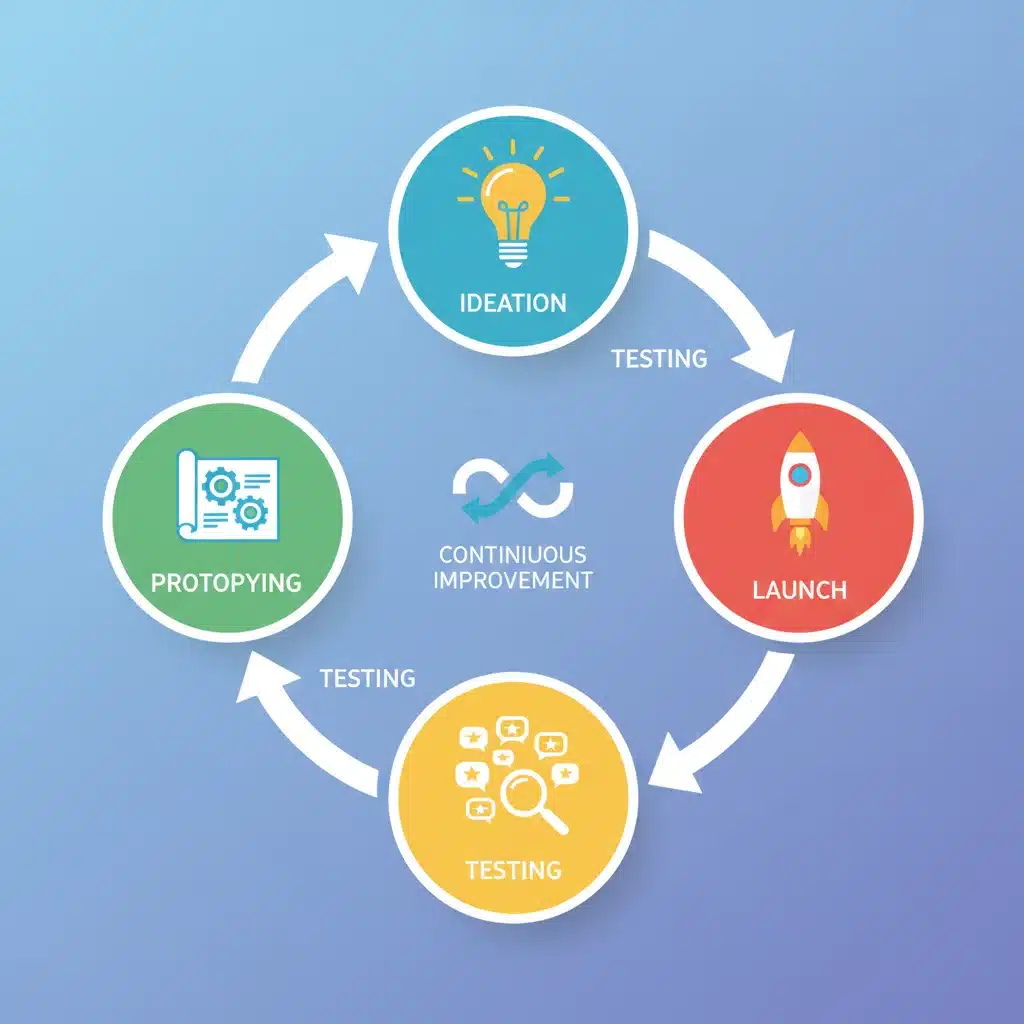
5. Measure the Impact and Close the Loop
After a new feature or product is launched, it’s vital to measure its impact. Did it solve the problem identified in the surveys? Did it improve user satisfaction or engagement? Use follow-up surveys, analytics, and user testing to gather post-launch feedback. This not only validates your efforts but also provides new data for the next iteration of product development. Closing the loop with users by communicating how their feedback led to specific changes reinforces their value and encourages continued participation. This transparency is a powerful tool for continuously influencing product development.
Best Practices for Sustained Influence on Product Development in 2026
To ensure your efforts in influencing product development are continuous and impactful, adopt these best practices:
Establish a Feedback Culture
Foster an organizational culture where user feedback is not just tolerated but actively sought, valued, and integrated into every decision-making process. This means encouraging all teams, from sales to marketing to engineering, to understand and empathize with user needs. A culture that champions the user’s voice is inherently better at influencing product development.
Implement Continuous Listening Mechanisms
Don’t treat surveys as one-off events. Implement continuous listening mechanisms such as in-app feedback widgets, always-on feedback forms, and regular pulse surveys. This provides a constant stream of insights, allowing you to react quickly to emerging trends and issues, thereby maintaining a strong hand in influencing product development.
Leverage Advanced Analytics and AI
In 2026, AI and machine learning tools are indispensable for processing large volumes of qualitative and quantitative data. Utilize these technologies for automated sentiment analysis, trend identification, and predictive analytics to uncover deeper insights faster. These tools can highlight subtle patterns that might be missed by manual analysis, giving you an edge in influencing product development.
Segment Your User Base for Granular Insights
Not all users are the same. Segment your user base by demographics, usage patterns, subscription tiers, or behavioral data. This allows you to gather more granular feedback and understand how different segments interact with your product and what their unique needs are. Tailoring product development to specific segments can lead to more targeted and impactful solutions.
Prioritize Based on Business Goals and User Impact
While user feedback is crucial, it must be balanced with business objectives and technical feasibility. Use frameworks that allow you to prioritize features and improvements based on both user impact and strategic alignment. Not every piece of feedback can or should be implemented, but every piece should be considered thoughtfully for its potential in influencing product development.
Communicate Back to Users
Show your users that their feedback matters. When you launch a feature or make an improvement based on their suggestions, communicate this clearly. "You asked, we delivered!" This builds trust, strengthens the user community, and encourages continued engagement, creating a virtuous cycle for influencing product development.
The Future of Influencing Product Development: Trends for 2026 and Beyond
As we look further into 2026, several trends will continue to shape how we gather and leverage user insights for influencing product development:
- Hyper-Personalized Feedback Collection: Surveys will become even more tailored to individual user contexts and behaviors, asking questions that are highly relevant to their specific journey.
- Predictive Analytics for User Needs: AI will increasingly predict future user needs and potential pain points before they even arise, allowing for proactive product development.
- Immersive Feedback Experiences: Virtual and augmented reality might offer new ways to collect contextual feedback, allowing users to interact with prototypes in more realistic environments.
- Ethical Data Collection and Privacy: With increasing regulations, transparency and ethical practices in data collection will be paramount, building user trust and ensuring quality feedback.
Conclusion: Your Blueprint for Influencing Product Development
Influencing product development through user insights is not merely a task; it’s a strategic imperative for any organization aiming for sustained success in 2026 and beyond. By meticulously designing surveys, rigorously analyzing data, and effectively translating insights into actionable strategies, you can ensure that the products you build truly resonate with your audience.
Remember, the goal is to create a symbiotic relationship between your users and your development process. Their feedback is a gift, offering a direct path to innovation, relevance, and market leadership. Embrace the journey from survey to solution, and empower your organization to build the future, one insightful piece of feedback at a time. By consistently applying these principles, you will not only be influencing product development but actively shaping the future of your industry.