Top 5 Product Testing Platforms US 2026: Data-Backed Insights

Anúncios
Comparison and Analysis: Evaluating the Top 5 Product Testing Platforms in the U.S. for 2026 – Data-Backed Insights
In the rapidly evolving landscape of consumer markets, the success of any new product hinges significantly on thorough and insightful testing. Businesses in the United States, from agile startups to multinational corporations, are constantly seeking the most effective and efficient ways to gather authentic user feedback. As we look towards 2026, the array of available product testing platforms US has grown, offering sophisticated tools and methodologies to unearth crucial consumer insights. This comprehensive guide dives deep into the top 5 product testing platforms available in the U.S., providing a data-backed analysis to help you make an informed decision.
Choosing the right product testing platform US is not merely about selecting a vendor; it’s about partnering with a system that aligns with your product development lifecycle, budget, and specific research needs. The stakes are high: a well-tested product can lead to market dominance, while a poorly vetted one can result in significant financial losses and reputational damage. Our analysis considers several critical factors, including panel quality, testing methodologies, analytical capabilities, integration potential, and, of course, cost-effectiveness. By dissecting these elements, we aim to equip product managers, marketers, and researchers with the knowledge necessary to navigate this complex ecosystem.
Anúncios
The Imperative of Product Testing in Today’s Market
Before delving into specific platforms, it’s crucial to understand why robust product testing remains an indispensable component of product development. In an increasingly competitive environment, consumer expectations are at an all-time high. Products are no longer judged solely on their core functionality but also on their user experience, aesthetic appeal, sustainability, and perceived value. Early and continuous testing allows companies to identify flaws, validate assumptions, and refine their offerings before a costly market launch. This proactive approach minimizes risks, optimizes resource allocation, and ultimately enhances customer satisfaction and loyalty.
Anúncios
Furthermore, the data collected from product testing platforms US provides invaluable insights that extend beyond mere bug fixing. It informs marketing strategies, helps in identifying niche markets, and can even inspire entirely new product lines. In a data-driven world, the ability to leverage consumer feedback to make strategic decisions is a significant competitive advantage. The platforms we will discuss offer varying degrees of sophistication in data collection and analysis, catering to a wide spectrum of business requirements.
Key Criteria for Evaluating Product Testing Platforms
To ensure a fair and comprehensive comparison, we established a set of key criteria against which each product testing platform US was evaluated. These criteria reflect the most common needs and challenges faced by businesses engaged in product development:
- Panel Quality and Diversity: The demographic reach, reliability, and engagement of the tester pool. A diverse panel ensures feedback representative of your target market.
- Testing Methodologies: The range of testing options offered, such as usability testing, concept testing, A/B testing, in-home usage tests (IHUTs), and sensory evaluations.
- Data Analysis and Reporting: The platform’s ability to process raw data into actionable insights, including dashboards, statistical analysis, and customizable reports.
- User Experience and Interface: The ease of setting up tests, managing participants, and accessing results. A user-friendly interface reduces training time and increases efficiency.
- Integration Capabilities: The potential to integrate with other business tools, such as CRM systems, project management software, or analytics platforms.
- Pricing Structure: Transparency and flexibility of pricing models, including subscription fees, per-test costs, and enterprise solutions.
- Customer Support: The availability and quality of support, including technical assistance, onboarding, and strategic guidance.
- Security and Compliance: Data privacy measures and adherence to relevant regulations (e.g., CCPA, GDPR for broader context).
By meticulously applying these criteria, we can present a nuanced view of each platform’s strengths and weaknesses, enabling you to pinpoint the best fit for your specific needs when seeking a product testing platform US.
The Top 5 Product Testing Platforms in the U.S. for 2026
1. UserTesting: The Gold Standard for User Experience Insights
Overview: UserTesting remains a dominant force in the realm of qualitative user feedback, particularly for digital products and services. Its strength lies in its extensive global panel and its ability to deliver on-demand video feedback from real users performing specific tasks. For companies focused on refining user experience, UserTesting provides unparalleled depth of insight into how users interact with products, what challenges they face, and their overall emotional response.
Key Features:
- Global Contributor Network: Access to millions of diverse contributors across demographics and psychographics.
- Video Feedback: Rich, actionable video recordings of users speaking their thoughts aloud while interacting with your product.
- AI-Powered Analytics: Tools to quickly identify themes, sentiment, and key moments within video feedback.
- Live Interviews: Conduct real-time interviews with participants for deeper exploration.
- Mobile, Desktop, and Prototype Testing: Versatile testing capabilities across various platforms and stages of development.
Pros: Excellent for qualitative insights, rapid feedback turnaround, intuitive platform, comprehensive video analysis tools. Ideal for understanding ‘why’ users behave a certain way.
Cons: Can be on the higher end of the pricing spectrum, particularly for smaller businesses or those needing extensive quantitative data. Primarily focused on digital product interaction.
Ideal For: Companies prioritizing user experience (UX) research, software and app developers, e-commerce businesses, and anyone needing deep qualitative insights into digital product usability. It stands out as a premier product testing platform US for digital-first companies.
2. Centercode: Enterprise-Grade Beta Testing Management
Overview: Centercode specializes in managing beta tests and early access programs at scale. It’s designed for enterprises that require a structured, rigorous approach to testing physical products, software, and hardware before launch. Centercode provides a robust platform for recruiting, managing, and engaging a large pool of beta testers, ensuring comprehensive coverage and detailed feedback.
Key Features:
- Tester Recruitment and Management: Advanced tools for segmenting and engaging a large community of testers.
- Feedback Management: Centralized system for collecting, categorizing, and prioritizing bug reports, feature requests, and general feedback.
- Test Planning and Execution: Tools for creating detailed test plans, assigning tasks, and tracking progress.
- Reporting and Analytics: Customizable dashboards and reports to track test metrics and identify critical issues.
- Integrations: Connects with popular project management and bug tracking systems.
Pros: Highly scalable for large-scale beta programs, excellent for managing complex test cycles, strong focus on structured feedback and issue tracking. A top-tier product testing platform US for comprehensive beta management.
Cons: Can have a steeper learning curve due to its extensive features. May be overkill for very small businesses or simple product tests.
Ideal For: Medium to large enterprises launching complex hardware, software, or IoT products that require extensive beta testing and structured feedback management.
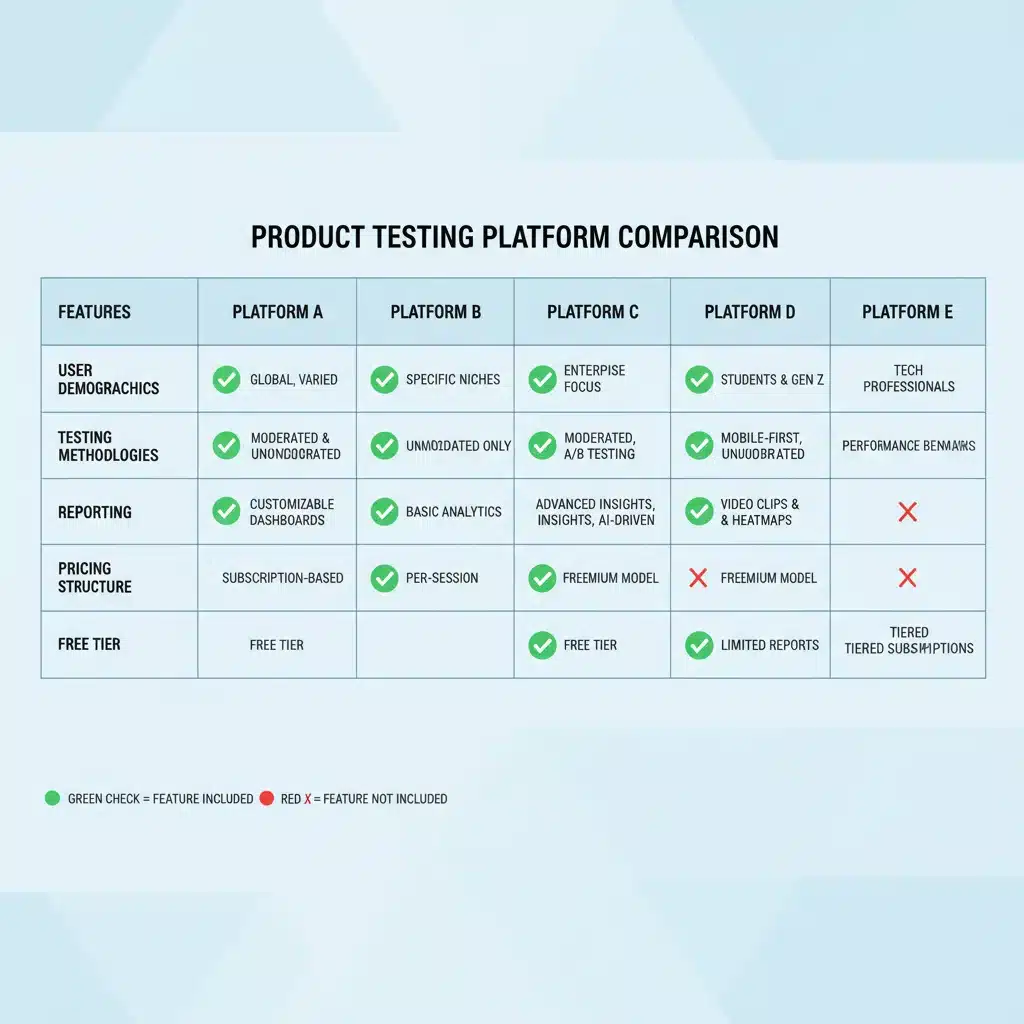
3. TryMyUI: Affordable Usability Testing with Visual Insights
Overview: TryMyUI offers a more budget-friendly alternative to UserTesting while still providing valuable video-based usability insights. It focuses on delivering quick, actionable feedback on websites, mobile apps, and prototypes. Its unique ‘UX Diagnostics’ feature provides AI-powered analysis of user emotions and behavior, adding another layer of insight.
Key Features:
- User Videos with Voiceover: Watch and listen as users interact with your product.
- Written Summaries: Testers provide written feedback alongside their video sessions.
- UX Diagnostics: AI-driven sentiment and emotion analysis, user journey mapping, and heatmaps.
- Demographic Targeting: Ability to target specific user groups from their panel.
- A/B Testing: Compare different versions of your product directly.
Pros: More affordable than some competitors, strong emphasis on visual and emotional insights, quick turnaround for results, easy to use for setting up basic tests. A competitive product testing platform US for cost-conscious businesses.
Cons: Panel size might be slightly smaller than industry leaders, and advanced qualitative analysis may require more manual effort. Primarily digital product focused.
Ideal For: Small to medium-sized businesses, startups, and individual UX designers looking for cost-effective usability testing with good visual and emotional insights.
4. Userlytics: Comprehensive Remote User Testing Suite
Overview: Userlytics offers a broad range of remote user testing capabilities, blending qualitative video feedback with quantitative metrics. It stands out for its flexibility in test design, allowing for unmoderated and moderated studies, card sorting, tree testing, and more. This makes it a versatile product testing platform US for various stages of product development.
Key Features:
- Diverse Testing Types: Unmoderated and moderated tests, card sorting, tree testing, 5-second tests, and more.
- Picture-in-Picture (PiP) Video: See the user’s face and screen simultaneously for richer context.
- Quantitative Metrics: Task success rates, time on task, SUS scores, and other quantifiable data.
- Advanced Targeting: Precise demographic and psychographic targeting for testers.
- Customizable Branding: Tailor the testing experience to match your brand.
Pros: Highly flexible with a wide array of testing methodologies, strong combination of qualitative and quantitative data, good panel quality, and robust reporting. A versatile product testing platform US for varied research needs.
Cons: Interface can be slightly less intuitive than some competitors for first-time users, and pricing can scale quickly with advanced features.
Ideal For: UX researchers, product managers, and marketing teams who require a flexible platform capable of handling a wide range of remote user testing studies, from early concept validation to post-launch optimization.
5. Qualtrics: The Enterprise Experience Management Powerhouse
Overview: While not exclusively a product testing platform, Qualtrics is an experience management (XM) giant that offers incredibly powerful tools for product experience (PX) research. Its capabilities extend far beyond simple usability tests, encompassing market research, brand tracking, and customer experience management. For organizations that need a holistic approach to understanding product and customer journeys, Qualtrics provides an integrated solution.
Key Features:
- Advanced Survey Platform: Highly customizable surveys with complex logic, question types, and branding.
- Product XM Platform: Specific modules for concept testing, pricing research, feature prioritization, and product feedback loops.
- Panels & Sampling: Access to a large global panel or ability to upload your own.
- Statistical Analysis: Robust analytical tools, including conjoint analysis, MaxDiff, and text analytics.
- Integrations: Extensive API and pre-built connectors to enterprise systems.
Pros: Extremely powerful and versatile for comprehensive market and product research, excellent for quantitative analysis, scalable for enterprise needs, and integrates well with broader XM strategies. A leading product testing platform US for holistic experience management.
Cons: Can be significantly more expensive and complex than standalone product testing platforms, requiring a dedicated team or expertise to leverage its full capabilities. May be overkill for basic usability testing needs.
Ideal For: Large enterprises and organizations that require an integrated solution for product experience, market research, and customer experience management, with a strong emphasis on quantitative data and advanced analytics.

Choosing the Right Product Testing Platform US for Your Business
The selection of a product testing platform US is a strategic decision that should be guided by your specific objectives, budget, and the stage of your product development. There isn’t a one-size-fits-all solution, as each platform brings its own set of strengths to the table. To simplify your decision-making process, consider the following:
- Identify Your Primary Testing Needs: Are you focused on deep qualitative UX insights (UserTesting, TryMyUI)? Do you need robust beta program management for complex products (Centercode)? Or do you require a comprehensive suite for both qualitative and quantitative research across the product lifecycle (Userlytics, Qualtrics)?
- Assess Your Budget: Pricing structures vary significantly. Platforms like TryMyUI offer more accessible entry points, while enterprise solutions like Qualtrics require a substantial investment but deliver unparalleled breadth.
- Consider Your Product Type: Digital products often benefit most from platforms specializing in remote usability (UserTesting, TryMyUI, Userlytics). Physical products or complex hardware might lean towards platforms with strong beta management capabilities (Centercode) or those that can facilitate in-home usage tests.
- Evaluate Your Team’s Expertise: Some platforms are designed for ease of use by non-researchers, while others, like Qualtrics, benefit from experienced research professionals to unlock their full potential.
- Scalability Requirements: Think about your future growth. Will the platform scale with your increasing testing needs and product portfolio?
For startups and small businesses, beginning with a platform like TryMyUI or Userlytics might be a cost-effective way to gather crucial feedback without overcommitting resources. As your products mature and your testing needs become more complex, you might then consider upgrading to more comprehensive solutions or integrating multiple platforms.
Large enterprises, on the other hand, might find immediate value in the extensive capabilities of Centercode for their structured beta programs or Qualtrics for its overarching experience management framework. The investment in these advanced platforms can yield significant returns by streamlining processes, reducing time-to-market, and ensuring product-market fit.
The Future of Product Testing: Trends to Watch
The landscape of product testing platforms US is continually evolving, driven by technological advancements and changing consumer behaviors. Several key trends are shaping the future of product testing:
- AI and Machine Learning Integration: AI is increasingly being used to automate data analysis, identify patterns in feedback, predict user behavior, and even generate synthetic user personas for testing. This will accelerate insights and reduce manual effort.
- Augmented and Virtual Reality (AR/VR) Testing: As AR/VR technologies become more mainstream, testing products within these immersive environments will offer new ways to simulate real-world usage and gather feedback on virtual prototypes.
- Emotional and Biometric Data: Beyond explicit feedback, platforms are exploring ways to capture implicit emotional responses through facial recognition, eye-tracking, and other biometric data, providing deeper insights into user sentiment.
- Continuous Feedback Loops: The shift towards Agile development methodologies demands continuous feedback. Platforms will increasingly offer tools that integrate seamlessly into CI/CD pipelines, allowing for ongoing testing and iteration.
- Ethical AI and Data Privacy: With growing concerns about data privacy, platforms will need to enhance their security measures and ensure compliance with evolving regulations, building greater trust with both testers and businesses.
Staying abreast of these trends will be vital for businesses looking to maintain a competitive edge and ensure their product testing platforms US remain effective in a dynamic market. The platforms discussed in this article are already innovating in many of these areas, promising even more sophisticated tools in the years to come.
Conclusion: Strategic Investment in Product Testing
Investing in the right product testing platform US is not an expense; it’s a strategic investment in the success and longevity of your products. The platforms highlighted – UserTesting, Centercode, TryMyUI, Userlytics, and Qualtrics – each offer unique strengths tailored to different business needs and product development stages. From granular UX insights to large-scale beta management and comprehensive experience analytics, the tools available in 2026 are more powerful and diverse than ever before.
By carefully evaluating your requirements against the capabilities of these leading platforms, you can select a partner that will empower your team to build better products, reduce market risks, and cultivate deeper customer loyalty. The data-backed insights gained from robust product testing will not only inform your current development cycles but also shape your long-term product strategy, ensuring that your offerings consistently resonate with your target audience and stand out in a crowded marketplace. Make an informed choice, and set your products on the path to success.