Avoid Product Testing Scams: 3 Red Flags for 2026 Invitations

Anúncios
Avoiding Product Testing Scams: 3 Critical Red Flags in 2026 Invitations
In an increasingly digital world, opportunities to earn extra income or receive free products through legitimate product testing programs are more appealing than ever. Companies constantly seek consumer feedback to refine their offerings, making product testing a genuine and valuable industry. However, with the rise of legitimate opportunities comes a parallel surge in deceptive practices. Scammers are always looking for new ways to exploit eager individuals, and product testing invitations have become a fertile ground for their fraudulent schemes. As we look towards 2026, it’s crucial for consumers to sharpen their awareness and learn how to discern authentic invitations from elaborate hoaxes. The allure of free products or hefty payments can blind even the most cautious individuals, making it imperative to understand the tell-tale signs of a scam. Identifying these critical red flags early can save you from financial loss, identity theft, and a great deal of stress. This comprehensive guide will equip you with the knowledge to navigate the landscape of product testing invitations safely, ensuring you only engage with reputable programs and avoid falling victim to product testing scams.
The digital age has blurred the lines between genuine opportunities and elaborate traps. For those new to the world of product testing, or even seasoned individuals, the sophistication of modern scams can be startling. Fraudsters often mimic legitimate company branding, craft convincing narratives, and leverage social engineering tactics to gain trust. They prey on the desire for quick rewards and the excitement of being part of an exclusive testing group. This article delves deep into the mechanisms of these scams, providing actionable insights into the three most critical red flags you must watch for in 2026. By understanding these indicators, you empower yourself to make informed decisions, protect your personal data, and ensure your online interactions remain secure. Let’s explore how to stay one step ahead of the fraudsters and enjoy the genuine benefits of product testing without falling prey to product testing scams.
Red Flag #1: Unsolicited Invitations and Urgent Demands
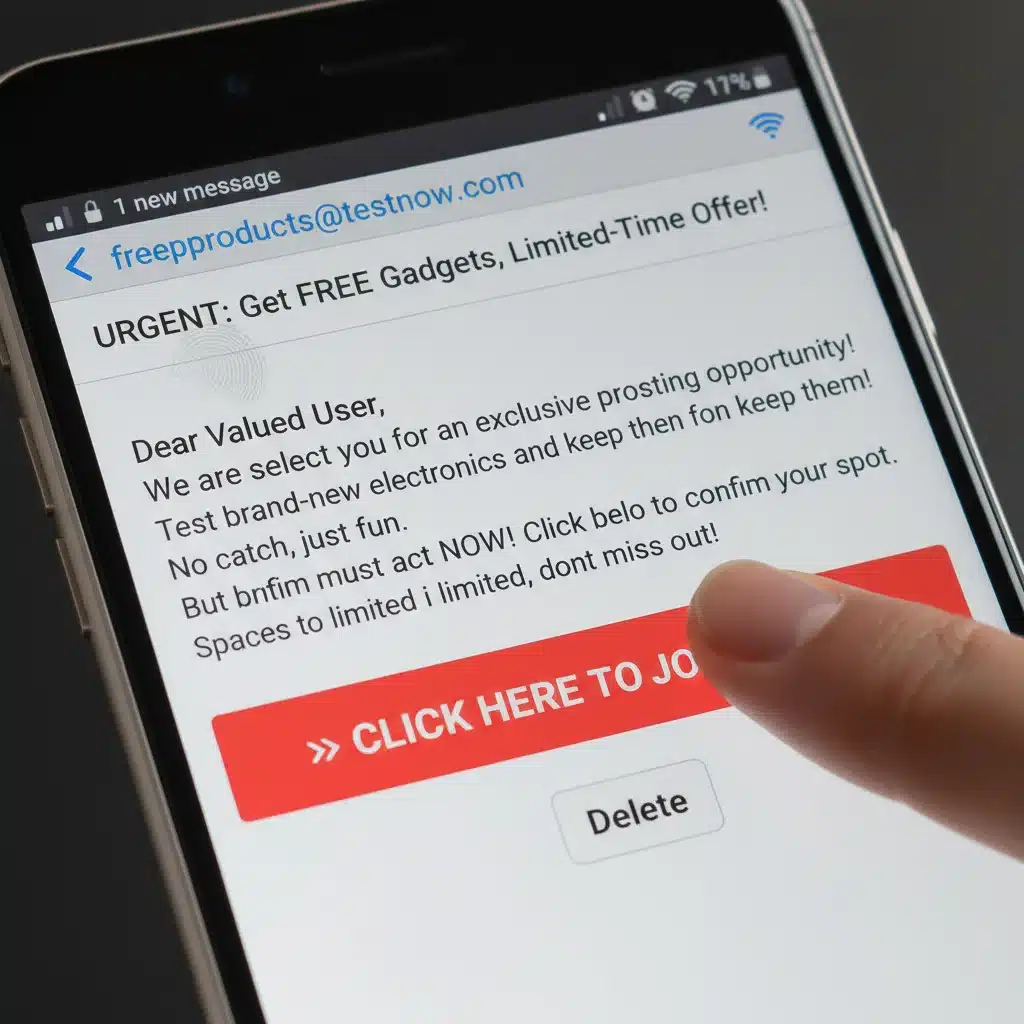
One of the most common and immediate red flags signaling a potential product testing scam is receiving an unsolicited invitation, especially one that carries an urgent tone. Legitimate product testing companies typically operate through established panels, direct applications on their official websites, or through reputable market research firms. They rarely send out random, mass emails or messages to individuals they have no prior relationship with. If an invitation lands in your inbox out of the blue, purporting to be from a well-known brand or an obscure company offering an incredibly lucrative testing opportunity, your scam radar should immediately activate.
Anúncios
Scammers thrive on urgency. They want to rush you into making decisions without giving you time to think critically or conduct due diligence. Phrases like “Limited Spots Available! Act Now!” or “Exclusive Offer – Expires in 24 Hours!” are classic tactics designed to create a sense of panic and prevent you from scrutinizing the offer. This urgency is often coupled with promises of exceptionally high compensation for minimal effort, or the chance to test highly anticipated, expensive products without any discernible qualification process. Remember, if an offer sounds too good to be true, it almost certainly is. Genuine product testing involves a selection process, often requiring specific demographics or experience relevant to the product. It’s not a free-for-all.
Furthermore, examine the sender’s email address. Is it from a generic domain (e.g., Gmail, Outlook, Yahoo) rather than a corporate domain (e.g., @companyname.com)? Are there misspellings or awkward variations of a legitimate company’s domain name (e.g., companyyname.com instead of companyname.com)? These subtle discrepancies are often overlooked in the rush to respond to an exciting offer. Always verify the sender’s authenticity by independently navigating to the official company website and looking for information about their product testing programs. Do not click on links within the suspicious email. An unsolicited invitation combined with high-pressure tactics is a strong indicator you are dealing with a product testing scam.
Consider the context of the invitation. Have you ever interacted with this company before? Did you sign up for any newsletters or product testing panels? If the answer is no, then the invitation is unsolicited. While some legitimate companies might use targeted advertising, a direct email invitation without prior engagement is highly suspicious. Be wary of messages that claim you were “selected” for an exclusive opportunity without explaining how or why. Fraudsters often use vague language to avoid providing verifiable details. The goal is to create an illusion of exclusivity and importance, making you feel special and therefore more likely to overlook the warning signs. Always pause, reflect, and verify before proceeding with any unsolicited and urgent product testing invitation.
Red Flag #2: Requests for Sensitive Personal or Financial Information Upfront
This red flag is perhaps the most critical to recognize, as it directly impacts your financial security and personal privacy. Legitimate product testing programs will never ask for sensitive financial information, such as your bank account number, credit card details, or Social Security number (SSN), during the initial application phase or before you have been officially selected and onboarded into a program. Their primary interest is in your demographic information, consumer habits, and feedback on products, not your financial credentials. Any request for such data upfront, especially under the guise of ‘verification,’ ‘shipping fees,’ or ‘payment processing,’ is a definitive sign of a product testing scam.
Scammers often craft elaborate narratives to justify these requests. They might claim they need your bank details to deposit your compensation, or your credit card information to cover a ‘refundable security deposit’ for the product. Some might even demand a small ‘activation fee’ to unlock your testing kit. These are all classic ploys. Real product testing companies bear the costs associated with shipping products and compensating testers. They do not ask testers to pay for anything out of pocket. If a fee is mentioned, it is a scam. Furthermore, legitimate companies will process payments through secure, established methods after the testing is complete, not upfront before any work has begun.
Anúncios
Beyond financial information, be cautious of requests for excessive personal data that seems irrelevant to product testing. While demographic data (age, gender, location, income bracket) is standard for targeting specific consumer groups, requests for your mother’s maiden name, pet’s name, or other security question answers should raise alarms. This information can be used for identity theft. Always question why specific pieces of information are being requested. If it doesn’t directly relate to assessing your suitability as a tester for a particular product, it’s likely a fraudulent attempt to gather data for malicious purposes. Protecting your identity is paramount, and sharing sensitive information with unverified entities is a direct path to becoming a victim of product testing scams.
Even if they don’t ask for direct financial information, be wary of requests to open new accounts on unfamiliar platforms or provide login credentials for existing accounts. This could be a phishing attempt to gain access to your other online services. Always remember that legitimate companies have robust data protection policies and will only ask for information that is absolutely necessary for the task at hand. If you encounter any request that makes you uncomfortable or seems overly intrusive, step back and consider it a major red flag. Your personal and financial security should never be compromised for a product testing opportunity.
Red Flag #3: Unprofessional Communication and Grammatical Errors
The credibility of any communication, especially one proposing a professional opportunity, hinges significantly on its presentation. Legitimate companies pride themselves on clear, concise, and error-free communication. They invest in professional writers and proofreaders to ensure their messages reflect their brand’s quality and professionalism. Conversely, a pervasive presence of grammatical errors, misspellings, awkward phrasing, and inconsistent formatting in a product testing invitation or subsequent correspondence is a glaring red flag for a product testing scam.
Scammers, particularly those operating from non-English speaking countries or those who are simply careless, often overlook these details. Their primary goal is to cast a wide net and trick as many people as possible, rather than meticulously crafting flawless communications. While a single typo might be an oversight, a pattern of poor grammar, incorrect punctuation, and strange sentence structures throughout an email, website, or application form is a strong indicator of fraud. Such errors immediately undermine the legitimacy of the offer and should prompt you to exercise extreme caution.
Beyond grammatical issues, pay attention to the overall tone and professionalism. Does the communication sound overly informal or, conversely, excessively formal and stilted in a way that feels unnatural? Do they use generic greetings like “Dear User” or “Valued Customer” instead of your name? Legitimate companies often personalize their communications, especially when inviting someone to an exclusive program. They will also provide clear contact information, including a physical address, phone number, and a professional email address, which can be cross-referenced with their official website.
Another aspect of unprofessionalism to watch for is the lack of a clear privacy policy or terms and conditions. Reputable organizations are transparent about how they collect, use, and protect your data. If these crucial legal documents are missing, poorly written, or contain vague language, it’s a significant warning sign. A legitimate product testing program will have a well-defined process, clear expectations for testers, and transparent policies regarding data handling and compensation. The absence of these elements, coupled with poor communication quality, strongly suggests you are encountering a product testing scam.
Before engaging further, take a moment to critically review all written communication. Does it read like something from a reputable organization? Or does it feel like a hastily put-together message designed to deceive? Trust your instincts. If something feels off about the language or presentation, it probably is. This attention to detail can be your first line of defense against falling victim to these pervasive schemes.
Verifying Legitimacy: Your Best Defense Against Product Testing Scams
Knowing the red flags is the first step, but actively verifying the legitimacy of a product testing opportunity is your ultimate defense against product testing scams. Never rely solely on the information provided in an unsolicited email or message. Always perform independent research.
Research the Company Independently
If the invitation purports to be from a well-known brand, visit their official website directly by typing their URL into your browser (do not click links in the suspicious email). Look for a “Product Testing,” “Market Research,” or “Careers” section. See if the opportunity is advertised there. If the company is obscure, search for reviews, news articles, and any mentions of scams associated with their name. Check business registries or consumer protection websites for their legitimacy. A lack of online presence or negative reviews should make you wary.
Check for Official Contact Information
Legitimate companies will have verifiable contact information. Look for a physical address, a corporate phone number, and official email addresses. Try calling the number or sending an email to a general inquiry address found on their official site to ask about the product testing program. If the contact information is missing, generic, or leads nowhere, it’s a major red flag.
Read Reviews and Testimonials (Critically)
While reviews can be helpful, approach them with a critical eye. Scammers sometimes create fake testimonials. Look for consistent patterns in reviews across multiple independent platforms. Be suspicious of overly positive, generic reviews that lack specific details, or a sudden influx of five-star reviews for a previously unknown entity. Websites like the Better Business Bureau (BBB) or consumer review sites can offer valuable insights.
Understand the Process
Genuine product testing involves a clear process: application, selection, product shipment, testing period, feedback submission, and then compensation. If any of these steps are vague, skipped, or deviate significantly from this standard, it’s a cause for concern. Be especially wary if they promise immediate payment or products without any clear testing protocols.
Trust Your Gut Instincts
If an offer feels too good to be true, or if any part of the communication or process makes you feel uneasy, trust your instincts. It’s better to miss out on a potentially legitimate (but suspicious) opportunity than to fall victim to a product testing scam. Your intuition is a powerful tool in identifying deception.

The Evolving Landscape of Product Testing Scams in 2026
As technology advances, so do the methods of fraudsters. In 2026, we can expect product testing scams to become even more sophisticated, leveraging AI and deepfake technology to create highly convincing fake websites, emails, and even video messages. This makes it even more imperative for individuals to be vigilant and educated.
AI-Enhanced Phishing
Scammers are increasingly using AI to generate more grammatically correct and personalized phishing emails, making Red Flag #3 (unprofessional communication) harder to spot. AI can also be used to create highly realistic fake websites that perfectly mimic legitimate company sites, making independent verification crucial. Always double-check URLs for subtle misspellings or unusual domain extensions.
Deepfake Video and Audio
Imagine receiving a video message from a seemingly legitimate company representative inviting you to test a product. With deepfake technology, scammers can create convincing videos or audio clips that appear to be from real executives or employees. While this technology is still developing for mass scamming, it’s a threat to be aware of. Rely on official written communication and direct website verification over video or audio messages, especially if they are unsolicited.
Social Media Exploitation
Social media platforms will continue to be a hotbed for product testing scams. Fraudsters create fake profiles and pages mimicking legitimate brands, running promotions that link to phishing sites or collect personal data. Always verify the authenticity of a social media account by checking for blue checkmarks (verified badges), a long history of posts, and a significant, engaged following. Be skeptical of posts that promise extravagant rewards for minimal effort or ask you to share personal information publicly.
Cryptocurrency and Gift Card Demands
While not new, the demand for payment in non-traceable forms like cryptocurrency or gift cards for ‘shipping’ or ‘security deposits’ will likely persist and even increase. These methods are favored by scammers because they are difficult to trace and recover. Remember, legitimate companies will never ask for payment in these forms for product testing opportunities.
Staying informed about these evolving tactics is just as important as knowing the foundational red flags. Continuous learning and a healthy dose of skepticism are your best tools in the fight against product testing scams.
Conclusion: Empowering Yourself Against Product Testing Scams
The world of product testing offers exciting opportunities for consumers to influence product development and enjoy new items, often for free or with compensation. However, the landscape is also fraught with peril, as scammers continuously adapt their tactics to exploit unsuspecting individuals. By understanding and diligently applying the knowledge of the three critical red flags discussed – unsolicited invitations with urgent demands, requests for sensitive personal or financial information upfront, and unprofessional communication with grammatical errors – you can significantly reduce your risk of falling victim to product testing scams.
In 2026 and beyond, vigilance will be your most valuable asset. Always take the time to independently verify any product testing invitation, regardless of how appealing it may seem. Research the company, scrutinize their communication, and never, under any circumstances, provide sensitive financial or personal information to unverified entities. Remember that legitimate opportunities exist, but they require careful discernment to find. Empower yourself with knowledge, trust your instincts, and prioritize your digital security. By doing so, you can safely explore the rewarding world of product testing and avoid the pitfalls of fraudulent schemes, ensuring your online experiences remain positive and secure.